Have you ever felt stuck in your yoga journey, unable to build the upper-body strength or core control needed for advanced poses? I’ve been there too.
As a certified yoga teacher, I remember how frustrating it felt to hit a plateau. That’s when I discovered Lolasana, or Pendant Pose—a powerful arm balance that taught me strength, focus, and control.
Though it looks simple, it challenged me deeply, both physically and mentally. Today, I teach it with confidence, knowing it builds true inner and outer strength.
Let me walk you through this pose and show how it can transform your practice.
What Does the Mean of Lolasana (Pendant Pose)

Lolasana comes from the Sanskrit word “Lola,” meaning swinging or dangling, and “asana,” which means pose. So, Lolasana literally translates to “Dangling Pose” or “Pendant Pose.”
In this pose, the body is lifted off the floor using the hands, with the legs crossed and tucked up toward the chest, making the body appear like a hanging pendant.
This pose is often used in Ashtanga Yoga and other traditional yoga styles. It looks calm on the outside, but it demands great core and arm strength, making it a perfect training pose for handstands and other arm balances.
Warm-Up Exercises
Before attempting Lolasana, your body should be well-prepared. Warming up helps activate your muscles, prevent injuries, and improve mobility. Here are a few warm-up exercises:
- Cat-Cow Stretches (Marjaryasana-Bitilasana): Loosens up the spine and activates the core.
- Wrist Rolls and Wrist Stretches: Lolasana puts weight on the wrists, so they must be flexible and strong.
- Plank Pose: Builds shoulder and core strength.
- Seated Forward Bend (Paschimottanasana): Loosens the hamstrings, preparing you to tuck your legs.
- Boat Pose (Navasana): Strengthens the core and mimics the leg-lift action in Lolasana.
Spend at least 5–10 minutes doing these warm-ups to fully activate the body.
How to Perform Lolasana (Pendant Pose)
Follow these steps to safely enter and hold Lolasana:
Start in a Seated Position
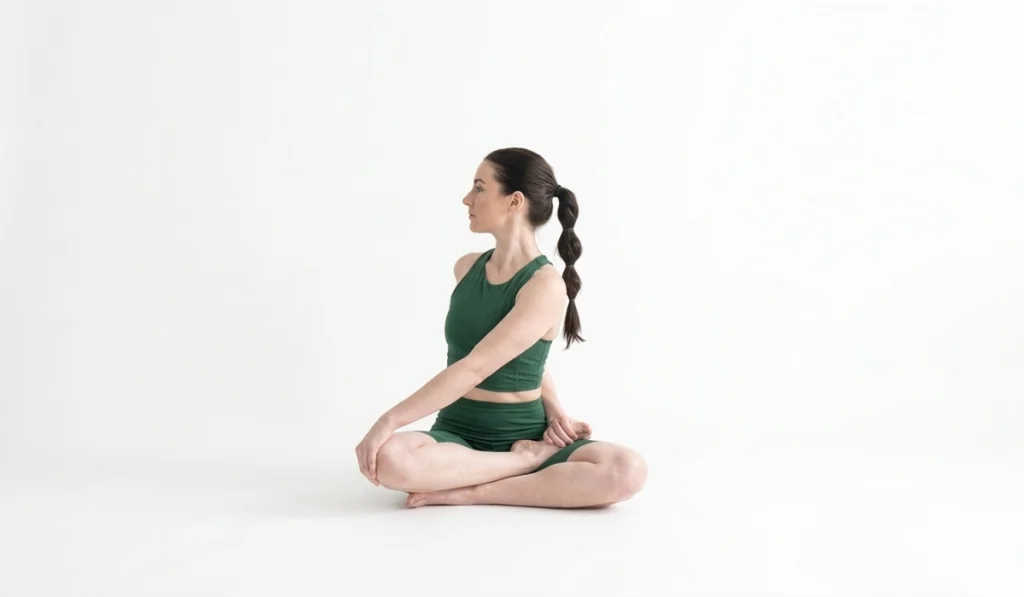
Sit on your yoga mat with your legs crossed (Padmasana or Sukhasana if Padmasana is too intense).
Place Your Hands on the Floor
Put your palms flat on the mat beside your hips. Fingers should point forward.
Engage the Core
Tighten your abdominal muscles and press down through your hands.
Lift the Body
On an inhale, use your strength to lift your entire body off the ground. Your hips, legs, and feet should all rise up.
Hold the Pose
Balance your weight on your hands. Keep your knees close to your chest and breathe steadily. Hold for 10–30 seconds if possible.
Lower Slowly
Exhale and gently bring your body back down to the mat.
Repeat
Try holding for 2–3 rounds to build endurance.
Pro tip: Use yoga blocks under your hands in the beginning to get extra height and support.
Physical Benefits
Lolasana may look compact, but it delivers full-body strength and control. Here’s how it helps your body:
- Builds Arm Strength: Constant pressure on the hands and arms strengthens the triceps, shoulders, and wrists.
- Strengthens the Core: Lifting your entire body requires deep abdominal control.
- Improves Balance and Coordination: Holding the body off the floor enhances body awareness and balance.
- Tones the Chest and Back: Helps develop upper-body tone and posture.
- Prepares for Advanced Poses: A great preparatory pose for handstands, crow pose, and other arm balances.
Mental Benefits
Besides physical strength, Lolasana builds mental toughness:
- Improves Focus: Staying balanced in mid-air requires full concentration.
- Boosts Confidence: Lifting your body off the ground gives a sense of power and achievement.
- Builds Patience: It takes time to master this pose, which teaches persistence and discipline.
- Reduces Stress: Focused breathing while holding the pose calms the mind.
Many practitioners feel more centered and grounded after regular practice of this pose.
Variations and Modifications
Not everyone can lift into full Lolasana on the first try. Here are some beginner-friendly options and advanced variations:
Modifications:
- Use Yoga Blocks: Place hands on blocks for better leverage and easier lift.
- Try Tuck Lifts: Start by lifting just the hips while keeping toes lightly on the floor.
- Work on One Leg: Try lifting one leg at a time to build strength gradually.
Variations:
- Full Lotus Lolasana: Perform the pose with legs in Padmasana (lotus) for added challenge.
- Swinging Lolasana: Gently swing your body forward and back like a pendant to increase control and wrist strength.
These modifications help you grow gradually without straining your body.
Safety Precautions
Lolasana is intense and should be approached with care. Here are some important safety tips:
- Avoid if You Have Wrist or Shoulder Injuries: This pose puts a lot of pressure on the wrists and shoulders.
- Don’t Force the Lift: If your body isn’t ready, pushing too hard can lead to strains.
- Use Padding: A yoga mat or soft padding under the hands helps protect your wrists.
- Warm Up Properly: Cold muscles can get injured easily. Always start with a warm-up.
- Listen to Your Body: If you feel sharp pain or extreme discomfort, stop immediately.
Consult a yoga teacher if you’re unsure about alignment or technique.
Final Words
Lolasana, or Pendant Pose, may be small in appearance, but it holds powerful lessons in strength, discipline, and balance.
As a yoga teacher, I’ve seen this pose help students break through physical limits and build true confidence. Remember, it’s not about how high you lift—it’s about how focused and engaged you are in the process.
Whether you’re a beginner or an advanced yogi, adding Lolasana to your practice will sharpen your core, sculpt your upper body, and calm your mind. Be patient, stay consistent, and enjoy the journey of growth through this amazing pose.
Sources:
How to do Lolasana (Pendant Pose) – OmStars. (n.d.).
Cole, R., & Cole, R. (2024, May 2). This is the most underrated yoga pose for Core-Strengthening. Yoga Journal.
Scriven, A. (2021, May 5). How to do lolasana or pendant pose. DoYou.