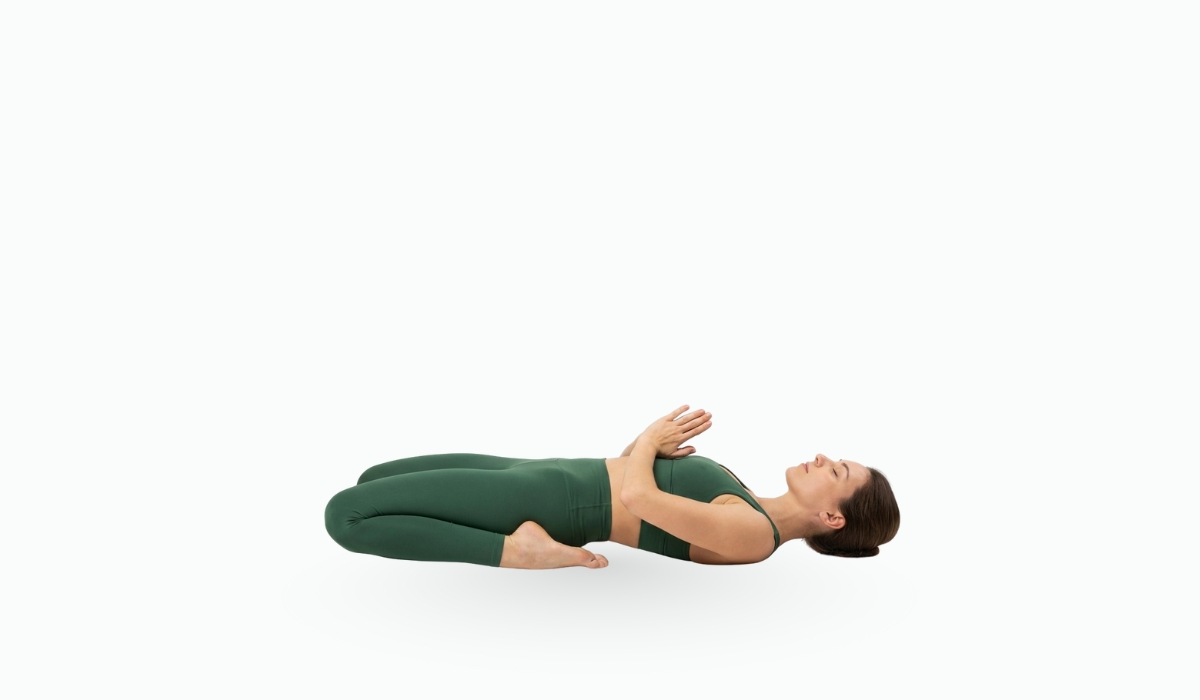
Yoganidrasana is an advanced yoga posture that represents deep relaxation and inner awareness. The name comes from two Sanskrit words: Yoga meaning union, and Nidra meaning sleep. Together, Yoganidrasana means “yogic sleep pose.”
This posture looks like a resting position, but it requires flexibility, control, and awareness. Yoganidrasana teaches how to relax the body while keeping the mind awake.
It helps reduce stress, calm the nervous system, and increase inner balance. With regular and careful practice, this pose supports both physical and mental relaxation.
Meaning of Yoganidrasana
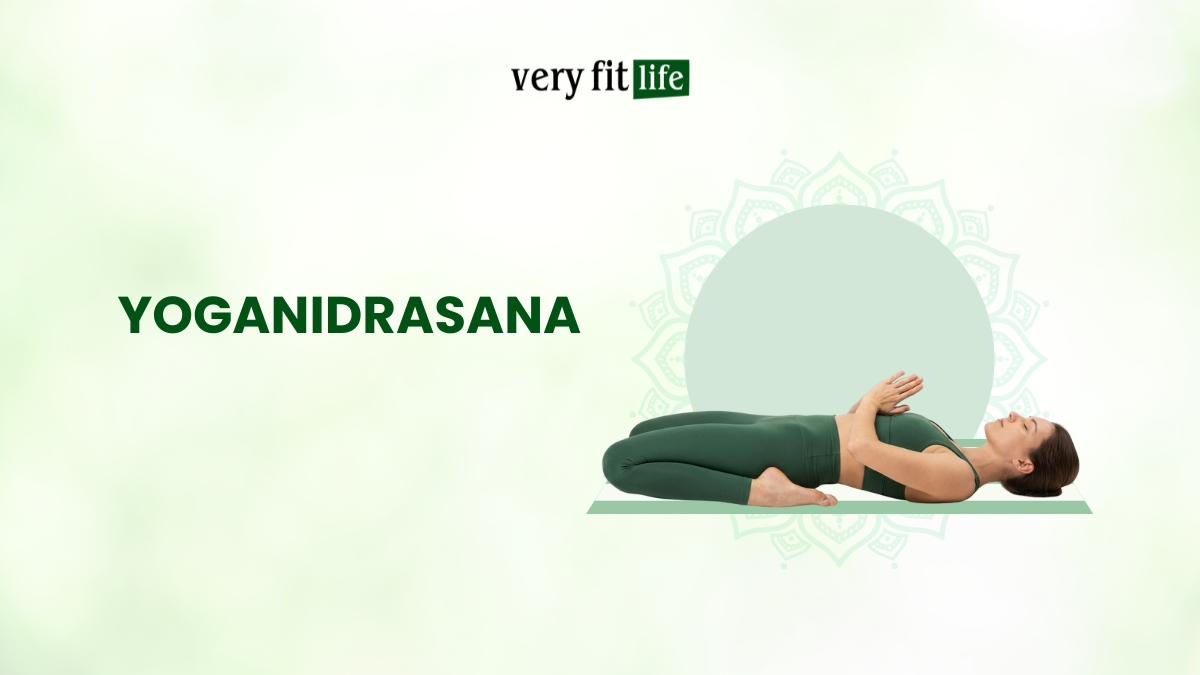
Yoganidrasana means sleep in awareness.
The pose shows the balance between deep rest and conscious awareness.
Type of Yoga Pose
Yoganidrasana is:
- A seated forward-fold pose
- A deep hip-opening pose
- An advanced flexibility posture
It requires flexible hips, spine, and legs.
Description of the Pose
In Yoganidrasana:
- The legs are folded over the shoulders
- The body bends forward
- The hands may join behind the back
- The head rests close to the ground
The body appears to be resting deeply.
Preparation for Yoganidrasana
Before practicing this pose, warm-up is essential.
Helpful preparatory poses include:
- Butterfly Pose
- Seated Forward Bend
- Hip-opening stretches
- Gentle twists
Warm muscles reduce the risk of injury.
How to Perform Yoganidrasana (Simple Steps)
- Sit comfortably on the mat
- Bend both knees and bring legs toward shoulders
- Place each leg behind the shoulders
- Cross ankles behind the neck
- Bend forward slowly
- Rest the chest and head toward the floor
- Breathe calmly and hold the pose
Release slowly and gently.
Breathing in Yoganidrasana
Breathing should be:
- Deep
- Slow
- Smooth
Breath helps relax the muscles and calm the mind.
Physical Benefits of Yoganidrasana
- Improves hip flexibility
- Stretches the spine
- Relaxes muscles
- Improves digestion
The pose supports deep physical relaxation.
Mental and Emotional Benefits
Yoganidrasana helps:
- Reduce stress
- Calm anxiety
- Improve sleep quality
- Increase mental clarity
It soothes the nervous system.
Yoganidrasana and the Nervous System
This pose has a calming effect.
It:
- Activates relaxation response
- Reduces mental tension
- Slows down racing thoughts
The body feels safe and calm.
Importance of Relaxation
Relaxation is the main lesson of Yoganidrasana.
It teaches:
- Letting go of tension
- Trust in the body
- Awareness during rest
True relaxation heals the body and mind.
Common Mistakes to Avoid
- Forcing the legs
- Holding the breath
- Rushing into the pose
- Practicing without warm-up
Gentle and patient practice is key.
Safety Tips
- Practice under guidance
- Use support if needed
- Stop if pain occurs
- Never force flexibility
Safety always comes first.
Who Should Avoid Yoganidrasana
Avoid this pose if you have:
- Hip injuries
- Knee problems
- Spine issues
- Pregnancy
Consult a yoga teacher before trying.
Modifications for Beginners
Beginners can:
- Practice half version of the pose
- Use cushions or bolsters
- Keep legs lower
- Focus on breathing only
Progress slowly with patience.
Yoganidrasana and Inner Awareness
This pose improves awareness.
It:
- Connects breath and body
- Brings inward focus
- Encourages mindfulness
Awareness deepens naturally.
Difference Between Sleep and Yogic Sleep
| Normal Sleep | Yogic Sleep |
| Unconscious | Aware |
| Passive | Active awareness |
| No control | Controlled relaxation |
Yoganidrasana teaches conscious rest.
Yoganidrasana and Meditation
This pose supports meditation.
It:
- Prepares the mind
- Calms thoughts
- Creates stillness
Meditation becomes easier after the pose.
Yoganidrasana in Yoga Practice
This pose is usually practiced:
- Near the end of a session
- After deep stretches
- Before final relaxation
It helps settle the body.
Spiritual Meaning of Yoganidrasana
Spiritually, the pose represents:
- Surrender
- Inner peace
- Balance between effort and rest
It reminds us to relax without losing awareness.
Yoganidrasana and Patience
Progress takes time.
The pose teaches:
- Acceptance
- Gentle effort
- Consistency
Patience leads to improvement.
Yoganidrasana and Self-Care
This pose is a form of self-care.
It helps:
- Heal stress
- Restore energy
- Calm emotions
Self-care improves overall health.
Conclusion
Yoganidrasana is the pose of deep yogic sleep, where the body rests and the mind stays awake. Though it looks calm and still, it requires flexibility, awareness, and patience. This pose helps reduce stress, calm the nervous system, and improve inner balance.
Yoganidrasana teaches the importance of relaxation with awareness. By practicing it mindfully and safely, one can experience deep rest, clarity, and peace. It reminds us that true strength also comes from knowing how to relax.
Sources:
Allen, W. (2025, August 26). Yoganidrasana.
Modestini, E., & Doane, N. (2007, August 28). Get wrapped up in yogic sleep pose. Yoga Journal.
Yogkulam, R. (2024, January 29). How to Do Yoganidrasana: A Step-by-Step Guide with Benefits. Rishikesh Yogkulam.