Tight hips? I’ve been there. As a yoga teacher, I used to avoid deep hip stretches because they felt too intense. But then I discovered the Fire Log Pose.
At first, it was challenging and even a little frustrating. But over time, I noticed how much looser and more balanced my hips became.
This pose helped me release years of tension and sit more comfortably in meditation. If your hips feel tight or you sit a lot during the day, Fire Log Pose can be a game changer.
Let’s look at what it is, how to do it, and why it helps.
What Does the Fire Log Pose Mean?
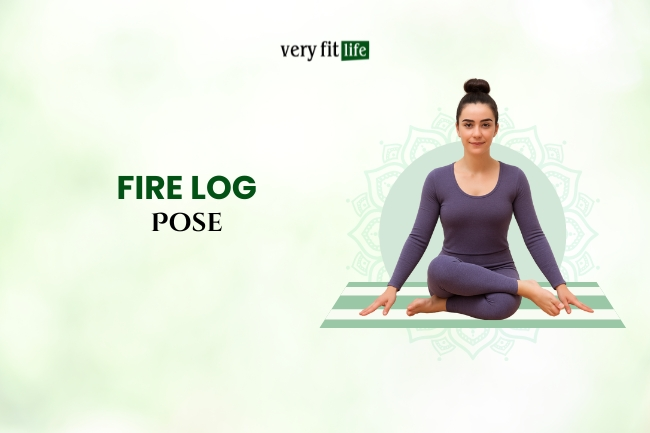
The Fire Log Pose, also called Agnistambhasana in Sanskrit, is a seated yoga pose that deeply stretches the hips and outer thighs.
The name comes from the way your shins stack like two fire logs—one on top of the other. It’s also known as Double Pigeon or Stacked Logs Pose in some yoga classes.
This pose helps bring heat to the hips, which is why it’s often used to warm up or cool down during a yoga session. It’s not about how deep you go, but about staying steady and mindful in the stretch.
Warm-up Exercises
Before you try Fire Log Pose, it’s smart to prepare your hips and legs with some gentle stretches. Here are a few simple warm-ups:
- Butterfly Pose
Sit with your feet together and your knees wide. Hold your feet and gently flap your knees like butterfly wings. - Cat-Cow Stretch
From a tabletop position, arch and round your back slowly to warm up your spine and hips. - Seated Forward Fold
Sit with your legs out in front and gently fold forward. This helps stretch your hamstrings and lower back - Hip Circles in Tabletop
On hands and knees, make big circles with your hips in both directions.
Warming up protects your joints and makes the pose more comfortable.
How to Perform Fire Log Pose
Follow these steps to get into the Fire Log Pose:
- Sit on the floor with your legs extended.
- Bend your right knee and place your right shin parallel to the front of your mat.
- Bend your left knee and stack your left shin directly on top of the right, ankle over knee and knee over ankle.
- Flex both feet to protect your knees.
- Sit up tall, keeping your spine straight
- If you feel open, you can slowly lean forward, keeping your back long.
- Breathe deeply and hold the pose for 30 seconds to 1 minute.
Switch sides and repeat with the other leg on top.
Here’s a video that explains this yoga pose in more detail.
Physical Benefits
Fire Log Pose offers several physical benefits:
- Deep Hip Stretch: It targets the outer hips and glutes, areas that get tight from sitting
- Improves Flexibility: With regular practice, your hips become more flexible and open.
- Better Posture: The pose encourages you to sit upright, which helps improve your posture.
- Aids Digestion: Gentle pressure on the abdomen can support digestion.
- Eases Sciatic Pain: For some people, it helps release tension in the lower back and reduce sciatic nerve pain.
This pose supports your body both in yoga and in everyday movements.
Mental Benefits
Beyond physical relief, Fire Log Pose also calms the mind:
- Relieves Stress: The deep stretch encourages slower breathing, which signals your nervous system to relax.
- Improves Focus: Holding the pose helps build patience and mental stillness.
- Encourages Mindfulness: You learn to sit with discomfort and observe your thoughts without reacting.
- Promotes Emotional Release: The hips are known in yoga as a place where emotions are stored. This pose can help release that built-up tension.
Even a few minutes in this pose can leave you feeling lighter and more at peace.
Variations and Modifications
Fire Log Pose can be intense, so it’s important to adjust it to your body’s needs. Try these variations:
- Use a Yoga Block: Place a block or folded blanket under your top knee if it doesn’t reach the bottom ankle.
- Sit on a Cushion: If your hips are tight, sitting on a folded blanket or cushion can make the pose more accessible.
- Half Fire Log (One Leg): Keep the bottom leg straight instead of bent. This reduces pressure on the hips and knees
- Lean Forward: To go deeper, fold forward from your hips while keeping your spine long.
Listen to your body and don’t force anything.
Safety Precautions
To stay safe and get the most out of this pose, keep these tips in mind:
- Avoid if You Have Knee Injuries: This pose puts pressure on the knees. Skip it if you’re recovering from a knee issue.
- Don’t Force the Stretch: Your hips may open over time. Pushing too hard can lead to injury.
- Use Props: Blocks and blankets are not a sign of weakness—they’re tools for safety and comfort.
- Flex Your Feet: Always keep your feet flexed to protect your knee joints.
- Warm Up First: Never jump into Fire Log Pose with cold muscles.
It’s okay to back off and try a simpler version until your body is ready.
Final Words
Fire Log Pose is a powerful way to stretch your hips and calm your mind. At first, it might feel challenging or uncomfortable. But with practice and patience, it becomes a favorite for many yogis, including me.
It taught me how to breathe through tension and find stillness in discomfort. Whether you’re new to yoga or an experienced practitioner, this pose can help you unlock strength and softness in both body and mind.
So grab a mat, take a seat, and let the fire in your hips transform into peace.
Sources:
Yoga Journal. (2025, March 21). Fire log pose.
Moves, A. (2024, July 24). How to do firelog pose in Yoga (Agnistambhasana) — Alo moves. Alo Moves.
Improving turnout – Fire Log pose – The Ballet Blog. (n.d.).