As a yoga teacher and writer, I, Andrea Cintulova, have experienced firsthand how powerful Pratyahara can be in deepening one’s yoga practice. When I first started, I often struggled with distractions—the noise of daily life, constant thoughts, and the pull of external stimulation.
But through consistent practice of Pratyahara, I learned to turn my awareness inward, creating a sense of balance and peace.
This article is built on years of experience, study, and teaching, offering you clear guidance on what Pratyahara means, how to practice it safely, and the many benefits it can bring.
What Does the Pratyahara Mean?

Pratyahara is the fifth limb of yoga in Patanjali’s Yoga Sutras. The word comes from two Sanskrit roots: “Prati” meaning “against” or “away,” and “Ahara” meaning “food” or “intake.” Together, it translates as the “withdrawal of the senses.”
Rather than feeding the mind with constant input from the outside world, Pratyahara helps us shift awareness inward.
This stage acts as a bridge between the external practices (like asana and pranayama) and the deeper internal stages of concentration (dharana), meditation (dhyana), and ultimate union (samadhi).
Pratyahara is not about rejecting the world but learning to control how we interact with it. It empowers practitioners to choose where to direct their focus, rather than being ruled by sensory distractions.
What is the Anatomy of Pratyahara?
Unlike physical yoga postures, Pratyahara works on the subtle anatomy of the body and mind. It involves:
- The Nervous System – By calming external input, it relaxes the sympathetic nervous system, reducing the “fight or flight” response.
- The Brain – It activates areas linked to focus and self-awareness while reducing overactivity in sensory-processing centers.
- The Energetic Body – Yogic philosophy describes it as withdrawing prana (life force) from the senses, redirecting it inward.
How to Perform Pratyahara
Pratyahara doesn’t have a single “pose.” Instead, it is a practice that combines mindfulness, breathwork, and focus. Here’s a simple method:
- Find a Quiet Space: Sit comfortably in a cross-legged posture or chair with your spine straight.
- Breathe Deeply: Begin with slow, rhythmic breathing to calm the mind.
- Close the Eyes: Gently shut your eyes to reduce visual distractions.
- Focus on Each Sense –
- Hearing: Notice surrounding sounds, then mentally withdraw from them.
- Smell: Observe scents, then let them fade from awareness.
- Taste: Become aware of taste in your mouth, then release it.
- Touch: Notice sensations on the skin, then shift focus inward.
- Sight: With eyes closed, withdraw from visual input.
- Direct Awareness Inward – Use a mantra, visualization, or focus on the breath to anchor yourself.
With regular practice, this sensory withdrawal becomes natural, preparing the mind for meditation.
Here’s a video that explains this yoga pose in more detail.
Benefits of Pratyahara
Pratyahara brings transformation at every level—physical, mental, emotional, and spiritual.
Physical Benefits
- Reduces tension in the body by calming the nervous system.
- Improves sleep quality by quieting sensory overload.
- Enhances overall energy by preventing sensory burnout.
Mental Benefits
- Builds strong focus and concentration.
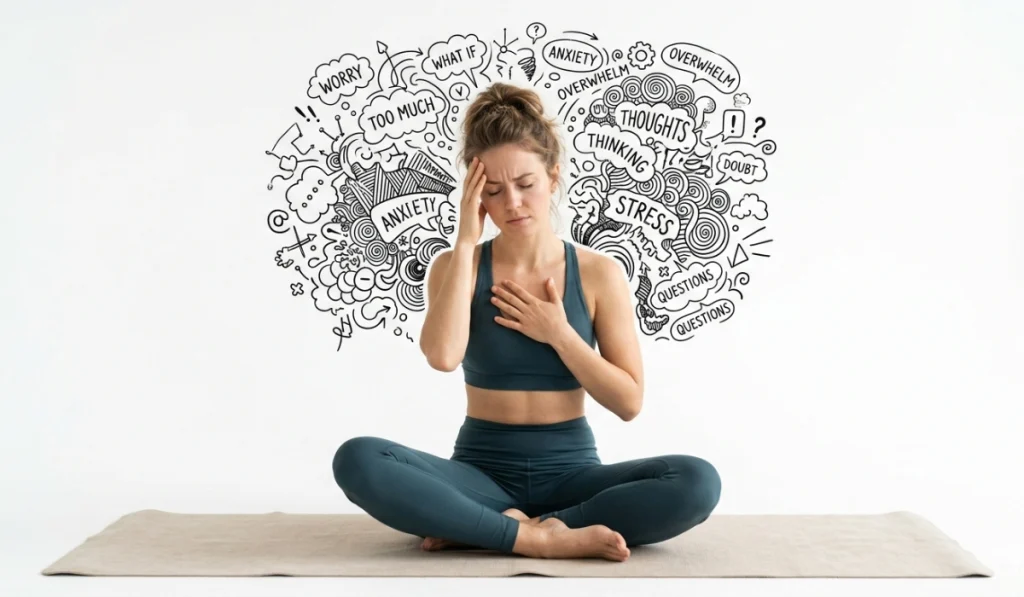
- Helps manage stress and anxiety.
- Creates a sense of clarity and calm by filtering unnecessary input.
Health Benefits
- Supports healthy blood pressure and heart rate.
- Reduces the risk of stress-related illnesses.
- Improves brain function and memory through regular inward focus.
Spiritual Benefits
- Acts as the gateway to meditation and higher states of awareness.
- Helps practitioners detach from external distractions, nurturing inner peace.
- Encourages self-realization by connecting deeply with the true self.
Variations and Modifications
Since Pratyahara is a subtle practice, variations help adapt it to different levels:
- Breath-Focused Pratyahara: Beginners can focus only on the breath to anchor awareness.
- Mantra-Based Pratyahara: Repeating a sacred sound or phrase to redirect senses inward.
- Guided Visualization: Using imagery (like a peaceful lake or light) to draw focus away from the outside world.
- Yoga Nidra: A guided relaxation that naturally incorporates sensory withdrawal.
Expert Insights and Recommendations
From my years of teaching, I recommend beginners approach Pratyahara with patience. Many students initially feel restless when withdrawing senses because the mind craves stimulation.
Yoga masters emphasize that Pratyahara is the turning point in yoga, where the practice shifts from external control (body, breath) to internal mastery (mind, spirit). To succeed:
- Practice consistently after asana or pranayama when the body and mind are calm.
- Use tools like gentle music or guided meditation initially, then progress to silence.
- Remember, it’s not about suppressing the senses but learning to regulate them consciously.
Safety Precautions
While Pratyahara is safe for most people, keep in mind:
- Avoid Forcing: Don’t suppress thoughts or sensations harshly; let them fade naturally.
- Mental Health Considerations: If you experience anxiety, depression, or trauma, practice under guidance, as inward focus may intensify emotions.
- Environment Matters: Start in a safe, quiet space to avoid overstimulation.
- Balance is Key: Withdrawal doesn’t mean isolation; balance your practice with healthy engagement in daily life.
Final Words
Pratyahara is often called the “forgotten limb of yoga,” yet it holds the key to unlocking meditation and deeper states of awareness. By practicing this sensory withdrawal, you gain freedom from distractions, clarity of mind, and harmony in spirit.
As I’ve seen in my own practice and in my students, even a few minutes of Pratyahara daily can bring peace and balance to modern, busy lives. It teaches us to live not as slaves to our senses but as masters of our inner world.
FAQs
Q1: Is Pratyahara the same as meditation?
No. Pratyahara is the step before meditation. It prepares the mind by withdrawing from external distractions.
Q2: How long should I practice Pratyahara?
Start with 5–10 minutes and gradually increase as you feel comfortable.
Q3: Can beginners practice Pratyahara?
Yes. Anyone can start with simple techniques like focusing on breath or guided meditation.
Q4: Do I need silence to practice?
Silence helps, but the real goal is to remain inwardly focused even in noisy environments.
Q5: What is the ultimate purpose of Pratyahara?
To gain mastery over the senses, calm the mind, and prepare for meditation and spiritual growth.
Sources:
P, L. (2025, April 28). Pratyahara: Yoga’s Forgotten Limb. The Art of Living Retreat Center.
Frawley, D. (2015, June 5). Pratyahara: Yoga’s Forgotten Limb.
Borohhov, D. (2023, April 26). Pratyahara Definition | What does Pratyahara mean? — Ananda. Ananda.