

As a yoga teacher, I’ve often witnessed how discipline can shape not just our practice, but our lives. I remember when I first started embracing Tapas Niyama—the third of the five Niyamas in Patanjali’s Yoga Sutras—I struggled with consistency and patience.
Over time, however, this principle became the foundation of my self-growth. Tapas taught me the value of persistence, even on days when motivation was low.
With years of teaching experience, I can confidently say that Tapas is one of the most transformative practices, guiding students toward physical strength, mental resilience, and spiritual depth.
What Does the Tapas Niyama Mean?
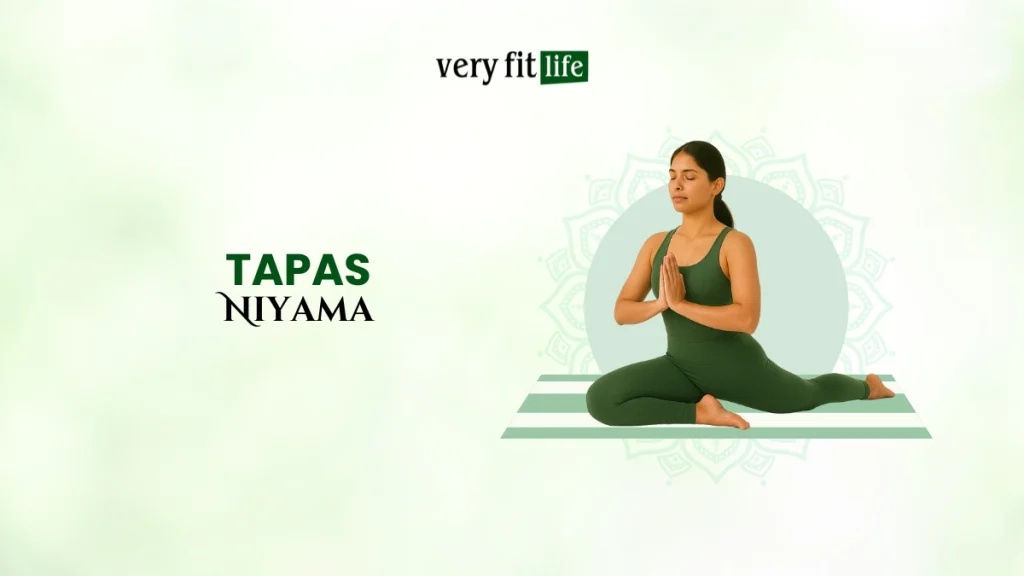
The word Tapas comes from the Sanskrit root “tap,” meaning “to heat” or “to burn.” In yogic philosophy, Tapas refers to the inner fire created through discipline, effort, and self-control.
It is not just about physical endurance but also about cultivating willpower and dedication in all aspects of life. Tapas Niyama encourages us to rise above comfort and laziness, to engage in practices that purify the body and mind, and to create transformation through consistent effort.
In simple terms, it’s the power of perseverance and the commitment to personal growth.
What is the Anatomy of Tapas Niyama?
The anatomy of Tapas is both physical and subtle. On a physical level, it involves building heat in the body through movement, breathing, and discipline.
When we practice asanas (postures) with intensity, our muscles generate heat, which helps in detoxifying the body.
On a mental and energetic level, Tapas ignites the “inner fire” or Agni. This inner energy burns away impurities, self-doubt, and limiting beliefs. Anatomically, Tapas involves the activation of the core, breath control, and the nervous system’s response to effort.
It is the balance between determination and surrender, ensuring we do not overexert but remain consistent.
How to Perform Tapas Niyama
Tapas is not a single pose or exercise but a principle you integrate into your practice and daily life. Here are steps to embody Tapas:
- Set Clear Intentions – Begin with a strong purpose, whether it’s improving your practice, building discipline, or cultivating mindfulness.
- Commit to a Routine – Dedicate time daily for yoga, pranayama, or meditation. The key is consistency.
- Embrace Challenge – Push yourself gently beyond your comfort zone. It could be holding a pose longer or meditating despite distractions.
- Use Breath Awareness – Heat and discipline are guided by breath. Controlled breathing (Pranayama) helps focus energy.
- Apply Tapas Beyond the Mat – Discipline in eating habits, daily routines, or even speech reflects Tapas in action.
Here’s a video that explains this yoga pose in more detail.
Benefits of Tapas Niyama
Physical Benefits
- Builds strength, stamina, and flexibility.
- Improves metabolism and digestion by stimulating the inner fire.
- Enhances posture and body alignment through consistent effort.
- Helps detoxify the body by sweating out impurities.
Mental Benefits
- Develops focus, patience, and mental clarity.
- Increases resilience against distractions and procrastination.
- Builds determination and self-confidence.
- Reduces stress by creating balance and structure in daily life.
Health Benefits
- Supports weight management through improved metabolism.
- Boosts immune system by strengthening inner vitality.
- Improves cardiovascular health with consistent physical discipline.
- Promotes better sleep through a balanced routine.
Spiritual Benefits
- Deepens connection with self and higher consciousness.
- Burns away ego, pride, and attachments.
- Encourages surrender to divine will.
- Prepares the practitioner for deeper meditation and union with the Self.
Variations and Modifications
Tapas can be practiced in multiple ways depending on one’s ability:
- Beginner’s Approach: Start small, such as committing to 10 minutes of yoga or journaling daily.
- Intermediate Practice: Introduce fasting, detox routines, or advanced asana holds.
- Advanced Practice: Engage in silent retreats, extended meditation, or strict discipline in diet and lifestyle.
Modifications can also include reducing intensity if one feels burnout or choosing gentler practices like mindful breathing instead of vigorous postures.
Expert Insights and Recommendations
As a yoga teacher, my recommendation is to treat Tapas with balance. Many students misunderstand Tapas as pushing themselves to the extreme. True Tapas is not about punishment but about disciplined love for growth.
Experts emphasize that Tapas works best when combined with compassion for oneself. Overexertion can lead to injury or mental fatigue, while too little effort leads to stagnation.
The secret is to stay consistent, respect your body’s limits, and gradually expand your capacity.
Safety Precautions
- Do not overstrain in asanas; listen to your body.
- Avoid rigid fasting or extreme diets without proper guidance.
- Balance effort with rest to prevent burnout.
- If you have medical conditions, consult a professional before starting intense practices.
- Remember: Tapas is about sustainable discipline, not self-harm.
Final Words
Tapas Niyama is the fire that transforms us. It reminds us that growth requires effort, but also consistency and patience.
By applying Tapas in our yoga practice and daily life, we burn away limitations, strengthen body and mind, and prepare the soul for higher states of awareness.
From personal experience, I can assure you that even the smallest daily commitment rooted in Tapas leads to powerful transformations over time.
FAQ’s
Q1. Is Tapas about self-punishment?
No, Tapas is about discipline and consistency, not punishment. It encourages effort with balance.
Q2. Can beginners practice Tapas Niyama?
Yes, beginners can start small—like committing to a short daily practice or mindful eating.
Q3. How is Tapas different from motivation?
Motivation comes and goes, while Tapas is about discipline that sustains practice regardless of mood.
Q4. Can Tapas be applied outside yoga?
Absolutely. Tapas applies to daily habits, diet, work, relationships, and spiritual life.
Q5. How long does it take to see results from Tapas?
Results vary. With consistency, most people notice positive changes in body, mind, and lifestyle within weeks.
Sources:
Newlyn, E. (2023, June 8). Understanding the niyamas – tapas.
Kuzmiak, M. (2021, May 4). Tapas — Fueling New Flames With Yoga’s Third Niyama. Yoga Circles.
Smith, E. N. (2023, March 2). The third niyama: tapas – inner fire. YogaUOnline.
Tganey. (2020, August 31). A discussion of Tapas – the third Niyama. Take Me to the River Yoga.


