Many yoga students struggle to build wrist strength and core stability without hurting themselves.
I remember the first time I tried Hamsasana, or Swan Pose—I lacked the control to hold myself up, and my wrists ached for days. It felt impossible.
But with guidance and patience, I turned it into one of my strongest poses. As a yoga teacher with years of experience, I’ve seen how Hamsasana challenges and transforms the body.
If you’re looking for a powerful way to build balance and focus, this pose is a game-changer. Let me walk you through it step-by-step.
What Does the Mean of Swan Pose (Hamsasana)?

Hamsasana comes from the Sanskrit words Hamsa (swan) and asana (pose). In yogic symbolism, the swan represents grace, balance, and the ability to float calmly through chaos.
The pose reflects this meaning—it requires calm focus and strong control over your breath and body.
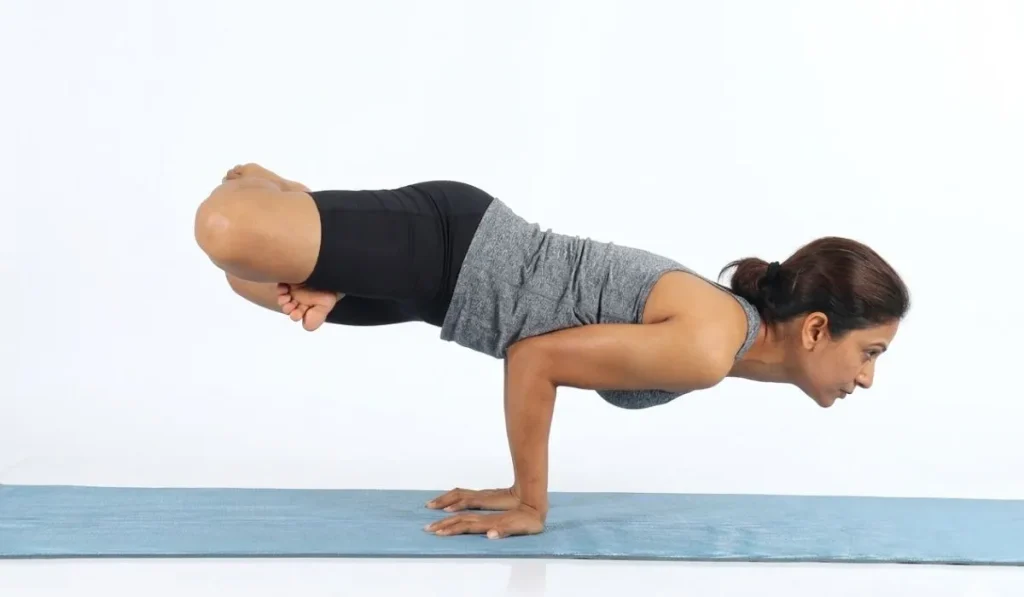
It’s an arm-balancing pose where your whole body is held up on your hands and elbows, with the legs straight and lifted.
Hamsasana isn’t just a physical challenge—it’s a symbol of spiritual focus and internal strength in traditional yoga practice.
Warm-up Exercises
Before attempting Swan Pose, it’s important to prepare the body with proper warm-ups. This avoids injury and helps you get the most from the pose.
- Wrist Rolls – Rotate your wrists in circles to loosen the joints. Do this for 30 seconds in each direction.
- Plank Pose – Hold for 30–60 seconds to activate the core and build shoulder stability.
- Downward-Facing Dog – Stretches the shoulders and hamstrings.
- Cat-Cow Pose – Helps warm up the spine and prepare the chest for balancing.
- Forearm Plank – Builds arm strength, especially in the triceps and core.
These movements prepare your arms, wrists, and core muscles—the key players in Swan Pose.

How to Perform Swan Pose (Hamsasana)
Follow these steps carefully to enter Swan Pose safely:
Start in a kneeling position. Place your hands flat on the floor with fingers pointing forward.

Bring your elbows close together. They should be slightly behind your wrists, not flaring out.
Lean forward and rest your lower ribs on your elbows. Your torso should rest gently across your arms.

Engage your core. This is crucial for maintaining balance and protecting your lower back.
Slowly stretch your legs behind you. Keep them straight and together, toes pointed.

Lift your entire body off the floor. You should now be balancing on your hands and elbows, with the chest forward and legs lifted.
Hold the pose for 5–15 seconds. Breathe calmly and focus on a spot on the floor to keep your balance.

To exit, slowly lower your knees and relax into Child’s Pose.
Here’s a video that explains this yoga pose in more detail.
Physical Benefits
Swan Pose is a strength builder for many parts of the body. Here are some key physical benefits:
- Strengthens the wrists, arms, and shoulders. You’re carrying your body weight on them.
- Builds core muscles. It takes deep abdominal control to hold the pose.
- Improves balance and coordination. You must control both your upper and lower body while staying steady.
- Enhances spinal alignment. The posture promotes length in the spine and prevents slouching.
- Improves circulation. Holding the body in this position activates blood flow in major muscle groups.
If practiced regularly, Hamsasana improves upper body tone and helps with other advanced arm-balancing poses.
Mental Benefits
While the pose looks intense, it also trains your mind. Mental benefits include
- Sharpens focus. Since balance is essential, your mind can’t wander.
- Reduces anxiety. Deep, steady breathing during the pose activates your parasympathetic nervous system.
- Builds mental strength. Holding the posture teaches you how to stay calm under pressure.
- Improves patience. Mastering this pose takes time, which helps you stay consistent and disciplined.
After practicing Hamsasana, many students report a boost in confidence and inner peace—just like the stillness of a swan gliding across water.
Variations and Modifications
If the full Swan Pose feels too challenging, don’t worry. Start with easier options and work your way up:
- Knees-on-the-floor version – Keep your knees down and only lift the upper body. This reduces the weight on your arms.
- Block support – Place a yoga block under your chest or legs for balance until you gain strength.
- Elbows wider apart – If your shoulders are tight, adjust the elbow position slightly for comfort.
Advanced practitioners can also try Padma Hamsasana, which includes crossing the legs into Lotus Pose while balancing.
Safety Precautions
Swan Pose requires care and awareness. Follow these safety tips:
- Avoid if you have wrist, elbow, or shoulder injuries.
- Warm up your body before every attempt—especially wrists and shoulders.
- Never force yourself into the pose. Build strength over time.
- Don’t hold your breath. Keep breathing steady and even.
- Use a yoga mat or folded blanket for support under the hands if the floor feels too hard.
If you feel pain (not just muscle effort), stop and rest. It’s always better to move slowly than to get hurt.
Final Words
Swan Pose (Hamsasana) is a beautiful balance between strength and grace. Like a swan floating calmly on water while paddling hard underneath, this pose teaches us the power of inner effort and outward stillness.
When I first began practicing Hamsasana, it felt impossible—but over time, it became a reminder that we are stronger than we think.
Whether you’re new to arm balancing or looking for a deeper challenge, Hamsasana is worth the effort. Start slow, stay consistent, and listen to your body. You’ll soon experience the strength and stillness of the swan within yourself.
Sources:
Admin. (2023, December 14). Hamsasana: 4 Powerful Benefits and Swan Symbolism in yoga. Rishikul Yogshala Rishikesh.
Watts, M. (2024, October 22). Benefits of Hamsasana (Swan Pose) & How To Do | Siddhi Yoga. Siddhi Yoga.
Yogaadmin. (2018, September 7). Hamsasana – the Swan pose. Yogic Way of Life.