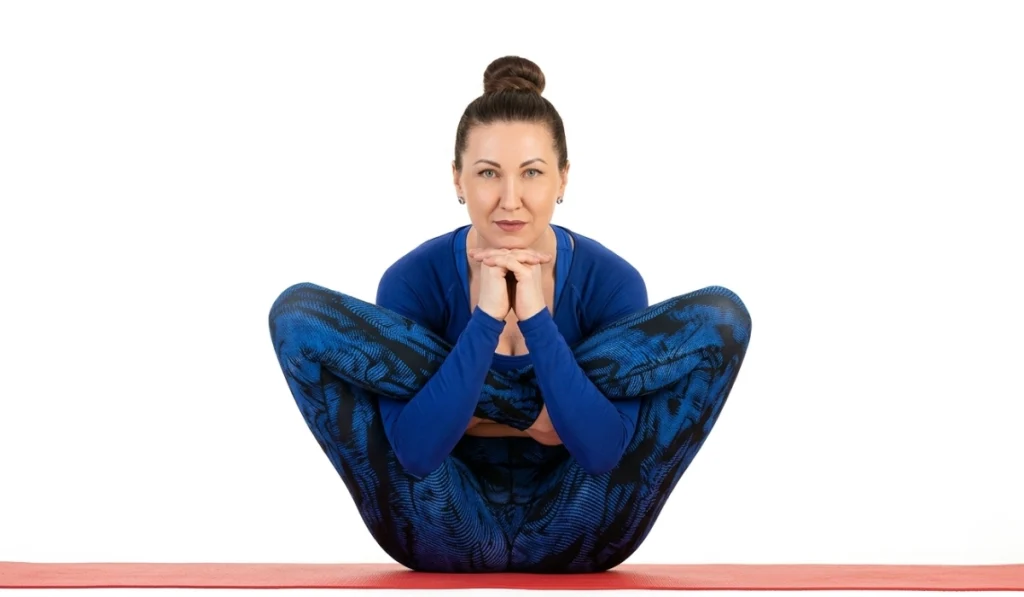
As a yoga teacher and writer, I, Andrea Cintulova, have experienced how transformative the journey toward Samadhi can be.
In my early years of practice, meditation often felt like a struggle—my mind wandered, and I longed for a deeper connection.
Over time, with patience and guidance, I reached moments of stillness that felt like pure presence, free of distraction. These glimpses of Samadhi showed me the profound peace and unity that yoga promises.
Drawing from my personal practice and years of teaching, this article will guide you through the meaning, practice, benefits, and safe application of Samadhi.
What Does Samadhi Mean?

Samadhi is the eighth and final limb of yoga in Patanjali’s Yoga Sutras. The Sanskrit word “Samadhi” comes from “Sam” (together, complete) and “Dhi” (concentration, awareness).
It refers to a state of complete absorption or union—where the practitioner, the act of meditation, and the object of focus dissolve into one.
Unlike the earlier limbs of yoga that involve discipline of body and mind, Samadhi transcends effort.
It is the experience of merging with the present moment, the inner self, or universal consciousness. Patanjali describes Samadhi as the ultimate goal of yoga—a state of liberation, clarity, and bliss.
What is the Anatomy of Samadhi?
Samadhi involves both physiological and spiritual anatomy:
- The Brain: In deep meditative states, brainwave patterns shift into theta and delta ranges, associated with profound calm, creativity, and expanded awareness.
- The Nervous System: The parasympathetic nervous system dominates, producing deep relaxation and reducing stress hormones.
- Energetic Body: Yogic texts explain Samadhi as the upward flow of prana (life force) through the chakras, leading to higher states of consciousness.
- Spiritual Dimension:It represents the union of individual self (Atman) with universal consciousness (Brahman).
Samadhi is not just a mental experience—it is a holistic state where mind, body, and spirit align in harmony.
How to Perform
Samadhi cannot be forced; it arises naturally from consistent practice of the earlier limbs of yoga. However, certain steps can prepare you:
- Begin with Asana and Pranayama: A steady body and calm breath create the foundation.
- Practice Pratyahara and Dharana: Withdraw from sensory distractions and develop concentration.
- Enter Dhyana (Meditation): Allow the mind to flow continuously toward the object of focus.
- Let Go of Effort: When meditation deepens, the distinction between “meditator” and “object” dissolves.
- Experience Samadhi: Awareness merges into pure presence, beyond thought and identity.
For most practitioners, Samadhi is experienced in glimpses at first—moments of stillness or complete absorption that gradually deepen with practice.
Here’s a video that explains this yoga pose in more detail.
Benefits of Samadhi
Samadhi brings transformation at every level of human experience.
Physical Benefits
- Relaxes muscles and reduces physical tension.
- Enhances energy levels by calming the nervous system.
- Supports better sleep and overall vitality.
Mental Benefits
- Improves focus, attention span, and memory.
- Reduces stress, anxiety, and overthinking.
- Creates inner clarity and resilience in daily challenges.
Health Benefits
- Supports cardiovascular health by lowering blood pressure.
- Boosts immune system through relaxation and balanced hormones.
- Helps manage stress-related conditions like headaches or insomnia.
Spiritual Benefits
- Fosters deep inner peace and detachment from material distractions.
- Creates a sense of unity with all beings and the universe.
- Opens the door to self-realization and liberation (moksha).
Variations and Modifications
Yoga philosophy describes different levels of Samadhi:
- Savikalpa Samadhi – The meditator is still aware of separation but deeply focused on the object of meditation.
- Nirvikalpa Samadhi – The highest state where thought ceases, and only pure awareness remains.
- Sahaja Samadhi – A natural state of continuous absorption, integrated into everyday life.
For beginners, modified practices like guided meditation, mantra repetition, or mindfulness can prepare the mind for deeper states of Samadhi.
Expert Insights and Recommendations
From my teaching experience, many students feel discouraged if they don’t experience Samadhi quickly. It’s important to remember: Samadhi is not a goal to chase but a natural outcome of consistent practice.
Expert yogis emphasize:
- Patience is Key – Even glimpses of inner stillness are valuable progress.
- Consistency Over Intensity – Daily practice, even for a few minutes, is more effective than occasional long sessions.
- Balance Life and Practice – Samadhi is not about escaping reality but living with deeper awareness within it.
- Stay Humble – Avoid seeking Samadhi as an achievement; instead, allow it to unfold naturally.
Safety Precautions
Samadhi is safe and beneficial, but practitioners should keep in mind:
- Avoid Forcing Meditation – Forcing concentration can cause frustration or fatigue.
- Mental Health Awareness – Those with unresolved trauma may find deep inward focus challenging and should seek guidance.
- Stay Grounded – Balance spiritual practice with daily life to prevent detachment from reality.
- Seek Guidance – Advanced practices are best supported by a knowledgeable teacher.
Final Words
Samadhi is the crown jewel of yoga—the state of unity, stillness, and liberation. It is not about escaping the world but learning to experience it with clarity, peace, and awareness. Through steady practice of the eight limbs, anyone can prepare the mind and body for glimpses of this profound state.
From my own journey and my students’ experiences, I can affirm that even brief moments of Samadhi bring lasting peace and insight. It teaches us that the essence of yoga is not about poses alone but about transforming the way we live and perceive life.
FAQs
Q1: Is Samadhi the same as enlightenment?
Samadhi is a state of absorption and unity, often described as the path toward enlightenment, though traditions may define the two differently.
Q2: Can beginners experience Samadhi?
Yes, beginners may experience brief moments of deep stillness or absorption, though lasting Samadhi develops with practice.
Q3: How long does it take to reach Samadhi?
It varies for each practitioner. With consistent practice, glimpses may come quickly, but full absorption often takes years.
Q4: Do I need a teacher to achieve Samadhi?
While self-practice is possible, guidance from a teacher can provide direction, support, and safety.
Q5: Is Samadhi only for yogis or monks?
No. Samadhi is available to anyone who practices meditation, mindfulness, and self-discipline, regardless of lifestyle.
Sources:
Tigunait, P. R. (2014, February 27). A Seeker’s Guide to Samadhi.
Samadhi Yoga Denver | 20+ years of transformation. (n.d.). Samadhi Yoga Sangha Denver.
The Editors of Encyclopaedia Britannica. (1998, July 20). Samadhi | Definition, Hinduism, Buddhism, Eightfold Path, & Facts. Encyclopedia Britannica.
Vasudev, S. J. (2024, February 13). Samadhi – A Taste of. Isha Foundation.