Many people today suffer from stiff backs, tight hamstrings, and mental stress. I’ve seen it in nearly every beginner yoga class I teach.
I used to struggle with the same issues myself. My body felt heavy and closed off. My mind was always racing, and simple tasks left me feeling drained.
That all changed when I discovered Padahastasana, the Hands Under Feet Pose. I’m Andrea Cintulova, a certified yoga teacher with over 10 years of teaching experience, and this pose is one of my personal favorites.
As a yoga writer and educator, I’ve seen how this pose helps both beginners and advanced practitioners.
Let’s explore this beautiful forward fold together.
What Does the Meaning of Padahastasana?
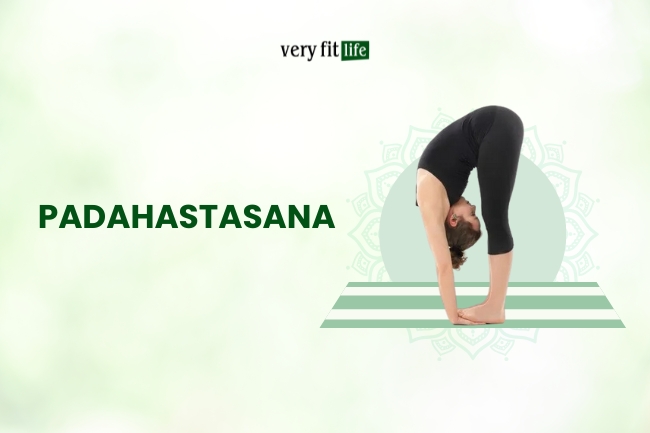
Padahastasana comes from Sanskrit:
- Pada means “foot”
- Hasta means “hand”
- Asana means “pose”
So, Padahastasana means Hands Under Feet Pose. In this asana, you bend forward and slide your hands under your feet. It is a type of forward fold that stretches the entire backside of your body—from your calves to your spine.
This pose is a part of traditional Hatha Yoga and is often included in Sun Salutation sequences.
Warm-Up Exercises
Before trying Padahastasana, warm up your body to avoid injury. These simple exercises will prepare your muscles and joints:
- Neck Rolls – Slowly roll your neck in circles to relax the shoulders.
- Shoulder Rolls – Loosen up tightness in your upper body.
- Cat-Cow Pose – Stretches the spine and warms up the back
- Standing Forward Fold (Uttanasana) – A gentler version of Padahastasana.
- Hamstring Stretch – Use a strap or towel to stretch the back of your legs.
Warming up helps your body feel ready and improves the depth of your forward fold.
How to Perform Padahastasana
Follow these steps carefully:
- Start in Mountain Pose (Tadasana) – Stand tall with feet hip-width apart.
- Inhale – Raise your arms overhead, lengthening your spine.
- Exhale – Bend forward from the hips (not the waist).
- Slide your hands under your feet – Palms facing upward. Toes should touch your wrists.
- Let your head relax down – Don’t strain your neck. Eyes can look toward the legs or behind you.
- Breathe deeply – Hold the pose for 5–10 breaths.
- To come out – Release your hands, inhale, and slowly roll back up to standing.
Physical Benefits
Practicing Padahastasana offers many physical rewards:
- Stretches the entire back – From the neck to the lower spine.
- Improves flexibility – Especially in the hamstrings and calves.
- Boosts blood flow – Inverted posture helps circulation to the brain.
- Strengthens thighs and knees – As you engage them to support your fold.
- Supports digestion – The forward bend massages internal organs.
This pose is great after long hours of sitting or standing. It realigns the spine and helps you feel lighter.
Mental Benefits
Padahastasana is not only for the body—it soothes the mind too.
- Calms the nervous system – Like other forward folds, it relaxes the brain.
- Reduces stress and anxiety – Deep breathing in this pose quiets mental chatter.
- Improves focus – As the pose draws attention inward.
- Brings emotional release – Many people feel lighter after holding this posture.
Practicing this pose daily, even for a few minutes, can greatly improve mental well-being.
Variations and Modifications
If you’re new or have tight muscles, don’t worry. Here are a few ways to modify:
- Bend your knees – This reduces strain on your hamstrings.
- Use blocks – Place your hands on yoga blocks instead of under your feet.
- Hold your ankles or shins – If you can’t reach your feet.
- Half Forward Fold – Keep your hands on your thighs or shins and maintain a flat back.
Advanced Variation:
- Try folding deeper and bringing your chest closer to your thighs while keeping legs straight. Only attempt if you’re warmed up and experienced.
Safety Precautions
Padahastasana is generally safe, but take caution in these cases:
- Back injuries – Avoid or consult a yoga therapist.
- High blood pressure or eye problems – Be cautious with inverted poses.
- Pregnancy – Skip or modify with support.
- Tight hamstrings – Use props or keep knees bent to avoid pulling muscles.
Final Words
Padahastasana is a gentle yet powerful yoga pose that connects your mind and body. From stretching tight muscles to calming racing thoughts, it offers full-body and full-mind healing.
As someone who has practiced this pose for years, I can say it’s a gateway to deeper awareness and well-being.
Whether you’re new to yoga or have years of experience, adding Padahastasana to your routine can bring flexibility, focus, and peace. Just remember—bend with care, breathe deeply, and stay present.
Sources:
Hand-To-Foot-Pose -Padahastasana – The Yoga Collective. (2020, December 25). The Yoga Collective.
Yogateket. (n.d.). Padahastasana – hand to feet pose – YOGATEKET. Yogateket.
Yogapedia. (2023, December 21). Padahastasana. Yogapedia.