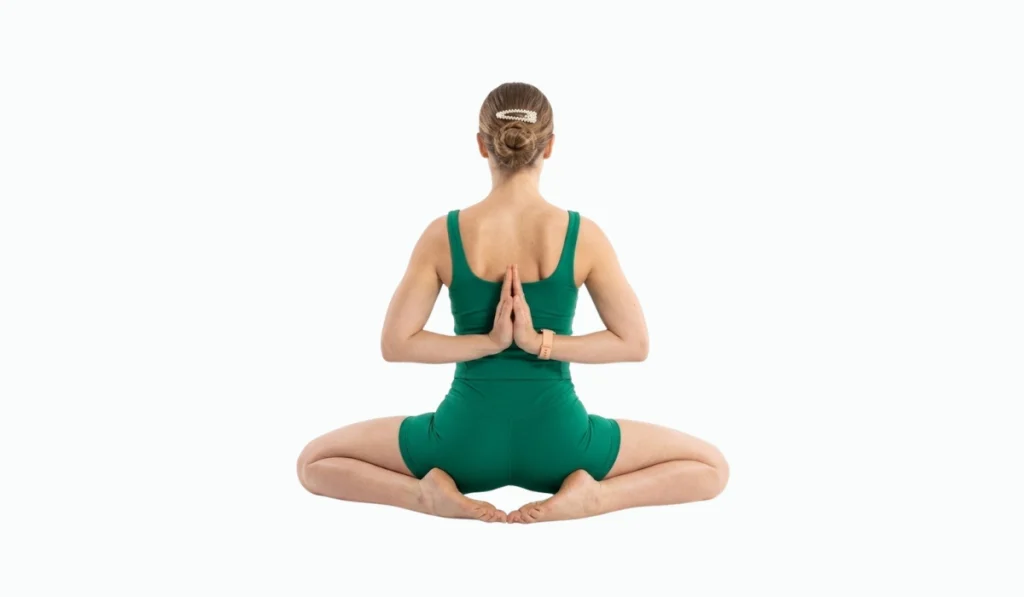
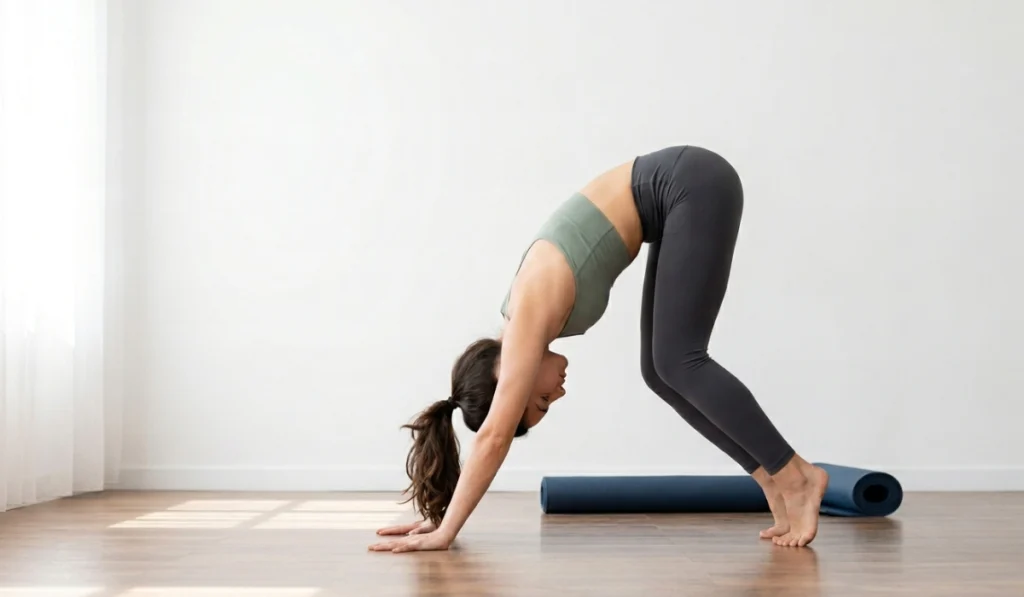
As a certified yoga instructor, I’ve practiced countless asanas, but Marichyasana B holds a special place in my daily sequence.
When I first attempted this pose, I struggled with knee discomfort and tight hips. Over time, through consistent, mindful practice and alignment-focused modifications, this pose became a gateway to deeper self-awareness.
If you’re struggling with internal tightness—physically or emotionally—this posture offers release.
According to yoga therapy and my teaching experience, Marichyasana B is not just a physical stretch, but a deeply transformative seated twist with grounding potential, especially beneficial for those seeking inner calm and digestive relief.
What Does the Marichyasana B Mean?

Marichyasana comes from the Sanskrit word Marichi, meaning “ray of light.”
In Hindu mythology, Marichi is one of the mind-born sons of Brahma and a sage of immense wisdom. The letter “B” in Marichyasana B refers to the second variation of four classic poses (A to D), each increasingly complex.
This version involves a deep hip opener and a twist, incorporating a half-lotus position with one leg extended and one leg bent.
It symbolizes enlightenment through discipline—teaching us to breathe through discomfort and find clarity in stillness.
What is the Anatomy of Marichyasana B?
Marichyasana B is a compound asana involving:
- Hip Joint: Deep external rotation is required in the lotus (Padmasana) leg.
- Knee and Ankle Joints: The bent leg requires stable flexion, while the lotus leg must be carefully positioned to avoid strain.
- Spine and Rib Cage: The twist engages the thoracic and lumbar spine, promoting spinal flexibility.
- Shoulders and Arms: Binding the hands behind the back activates shoulder rotation and chest expansion.
- Core Muscles: Stabilizers such as the obliques and transverse abdominis engage to support the twist.
Understanding this anatomy is essential for proper alignment and injury prevention.

How to Perform Marichyasana B
Step-by-Step Instructions:
Start in Dandasana (Staff Pose): Sit with legs extended and spine straight.

Bend the Right Leg into Lotus Position: Place your right foot on top of your left thigh.

Bend the Left Knee: Place the left foot flat on the floor near your left sitting bone.

Twist the Torso: Inhale, lengthen the spine. Exhale, rotate the torso to the left, bringing your right shoulder forward.

Bind the Arms: Reach your right arm around the right shin and your left arm behind your back to clasp fingers or wrists.

Fold Forward (Optional): With exhale, hinge from hips to bring the torso over the bent leg.

Hold: Stay for 5–10 breaths. Release gently and switch sides.
Tip: Always warm up the hips and spine before attempting.
Here’s a video that explains this yoga pose in more detail.
Benefits of Marichyasana B
Physical Benefits
- Opens the hips, hamstrings, and groin
- Strengthens spinal muscles and improves flexibility
- Stimulates abdominal organs and digestive system
- Enhances joint mobility, especially in the knees and ankles
Mental Benefits
- Calms the nervous system and relieves anxiety
- Improves focus and mental clarity
- Encourages patience and presence through breathwork
- Develops body awareness and emotional resilience
Health Benefits
- Aids digestion by massaging internal organs
- Detoxifies liver and kidneys through the twisting motion
- May help relieve menstrual discomfort and lower back pain
- Supports healthy circulation and lymphatic drainage
Spiritual Benefits
- Encourages introspection and emotional release
- Helps awaken Kundalini energy in deeper meditative practice
- Aligns with the principle of Svadhyaya (self-study)
- Fosters humility, devotion, and internal balance
Variations and Modifications
For Beginners:
- Skip the lotus leg and sit in a simple cross-legged position.
- Use a yoga strap to bridge the gap between hands if binding is difficult.
- Sit on a folded blanket to lift the hips and improve alignment.
For Advanced Practitioners:
- Deepen the forward fold to rest the chin on the knee.
- Try closing the eyes and holding the pose for longer to cultivate inner stillness.
For Injury Recovery:
- Keep the lotus foot loose or rest the ankle on the thigh without forcing.
- Avoid deep binds if recovering from shoulder or knee injuries.
Expert Insights and Recommendations
From my teaching experience, Marichyasana B is best approached with patience. Rushing into the bind or forcing the lotus can lead to injury.
I recommend warming up with hip openers like Baddha Konasana or Ananda Balasana (Happy Baby Pose). Breath is your best guide—if you’re holding your breath, you’ve gone too far.
In classes, I often emphasize using the twist to “wring out the stress” of the day and realign the body’s energy pathways. Practicing this pose consistently improves not only flexibility but also emotional control and self-discipline.
Safety Precautions
- Avoid Lotus Pose if you have knee, ankle, or hip injuries.
- Never force the bind—use props instead.
- Keep the spine long while twisting; avoid slouching or collapsing the chest.
- Do not perform on a full stomach—twisting can cause discomfort.
- Consult your doctor if you have hernia, pregnancy, or spinal conditions.
Listen to your body—pain is a signal to stop, not push further.
Final Words
Marichyasana B is not just a yoga posture; it’s a journey inward. It teaches the beauty of balance—between effort and surrender, strength and flexibility, physical posture and spiritual alignment.
Whether you’re a seasoned yogi or a curious beginner, incorporating this pose into your practice can open not only your hips and spine but also your heart and mind. Stay consistent, stay patient, and this posture will unfold its magic in time.
FAQ’s
Q1: Is Marichyasana B suitable for beginners?
It can be modified for beginners, but the lotus position and bind require flexibility. Use props or try Marichyasana A first.
Q2: Can I do this pose if I can’t sit in lotus?
Yes. You can place the foot loosely on the thigh or skip the lotus entirely and still benefit from the twist.
Q3: How long should I hold Marichyasana B?
Hold for 5–10 deep breaths or up to 1 minute per side, depending on comfort and flexibility.
Q4: What’s the difference between Marichyasana A and B?
Marichyasana A uses a straight leg and bent knee, while B adds the lotus leg, making it more complex.
Q5: Is this pose good for digestion?
Yes. The deep twist massages abdominal organs, promoting better digestion and detoxification.
Sources:
How to do Marichyasana B – Omstars. (n.d.).
Griffin. (n.d.). Marichyasana B | Practicing ashtanga.
Moore, J. (2019, July 26). Marichyasana “Marichi B Pose.” YogaPaws.