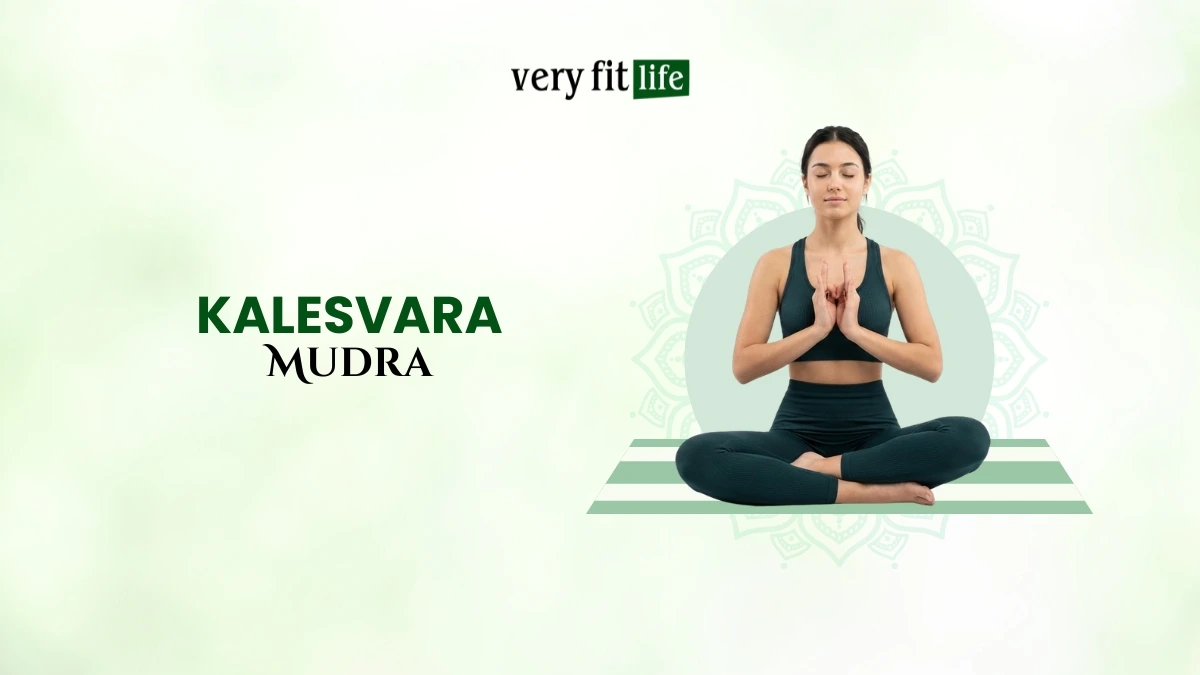
Kalesvara Mudra is a powerful hand gesture used in yoga and meditation to calm the mind and control thoughts. The word “Kalesvara” comes from Sanskrit, where “Kala” means time and “Ishvara” means master or lord. So, Kalesvara means “Lord of Time.”
This mudra is believed to help control restless thinking and bring mental clarity. It is simple to practice and suitable for beginners. When done with slow breathing, Kalesvara Mudra may reduce stress, improve focus, and support emotional balance.
Regular practice can help create inner peace and better self-awareness.
What Is Kalesvara Mudra?
Kalesvara Mudra is a hand gesture that helps slow down mental activity. It is often used during meditation and deep breathing exercises.
This mudra helps:
- Calm overthinking
- Improve concentration
- Reduce anxiety
It is especially helpful for people with busy or restless minds.
Meaning of the Word “Kalesvara”
The word “Kalesvara” means:
- Kala = Time
- Ishvara = Lord or Master
It symbolizes control over time and thoughts. In yoga philosophy, controlling the mind is like mastering time itself.
How to Perform Kalesvara Mudra (Step by Step)
Step 1: Sit Comfortably
Step 2: Form the Mudra
- Join the tips of your middle fingers together.
- Join the tips of your thumbs together.
- Fold the other fingers inward so that their middle joints touch.
- Hands will form a heart-like shape.
Step 3: Position the Hands
- Hold the mudra in front of your chest.
- Elbows relaxed.
Step 4: Focus on Breathing
- Close your eyes.
- Inhale slowly through the nose.
- Exhale slowly and deeply.
- Practice for 5–15 minutes
How Does Kalesvara Mudra Work?
In yoga belief, the middle finger represents balance and patience. When joined with the thumb (fire element), it creates control over mental energy.
This mudra may help:
- Slow breathing
- Reduce negative thinking
- Improve self-control
The shape of the mudra also promotes emotional stability.
Benefits of Kalesvara Mudra
1. Reduces Overthinking
It helps calm racing thoughts.
2. Improves Concentration
Regular practice may increase focus and memory.
3. Controls Anger
It supports emotional balance and patience.
4. Reduces Anxiety
Slow breathing with this mudra relaxes the nervous system.
5. Encourages Positive Thinking
It helps clear negative mental patterns.
Best Time to Practice
- Early morning
- Before meditation
- During stressful situations
- Before exams or important tasks
It can be practiced anytime you need mental calmness.
How Long Should You Practice?
- Beginners: 5 minutes
- Intermediate: 10–15 minutes
- Advanced: 20 minutes
Consistency gives better results.
Who Can Practice Kalesvara Mudra?
- Students
- Working professionals
- Meditation practitioners
- Anyone experiencing stress
It is safe and easy for most people.
Precautions
Kalesvara Mudra is generally safe. However:
- Do not strain your fingers.
- Keep breathing natural.
- Stop if you feel discomfort.
Always practice gently.
Kalesvara Mudra and Breathing
This mudra works best with slow breathing. Try this simple pattern:
- Inhale for 4 seconds
- Hold for 2 seconds
- Exhale for 6 seconds
Slow exhalation helps calm the nervous system.
Scientific View
Deep breathing activates the parasympathetic nervous system. This helps:
- Lower heart rate
- Reduce stress hormones
- Improve emotional control
While the mudra itself is symbolic, its benefits come mainly from mindful breathing and focus.
Common Mistakes
- Pressing fingers too hard
- Sitting with bent spine
- Breathing too fast
- Expecting instant results
Be patient and relaxed.
Difference Between Kalesvara Mudra and Other Mudras
| Kalesvara Mudra | Chin Mudra |
| Focus on mind control | Focus on awareness |
| Held near chest | Placed on knees |
| Used for emotional balance | Used for meditation focus |
Each mudra has a unique purpose.
Spiritual Importance
Kalesvara Mudra is believed to help control thoughts and reduce ego. By calming the mind, a person becomes more aware and peaceful.
It reminds practitioners that time and thoughts should not control us—we should control them.
With regular practice, it may deepen meditation and self-understanding.
Tips for Better Practice
- Practice in a quiet place
- Combine with slow breathing
- Keep spine straight
- Practice daily
Even short practice can make a difference.
Conclusion
Kalesvara Mudra is a simple yet powerful hand gesture that helps calm the mind and control overthinking. It supports better concentration, emotional balance, and stress relief. Easy to practice and safe for beginners, it works best when combined with slow and deep breathing.
With regular and mindful practice, Kalesvara Mudra may improve mental clarity and inner peace. Though small in action, it carries deep meaning about mastering time and thoughts. Consistency and patience are the keys to experiencing its full benefits.
Sources:
Sharma, D. (2025, July 5). Kalesvara Mudra: Meaning, Benefits & How to Do | Siddhi yoga. Siddhi Yoga.
Yogapedia. (2023, December 21). Kalesvara mudra. Yogapedia.
Kalesvara Mudra to clear the mind & Open to change | Radiant Shenti. (2024, July 8). Radiant Shenti.