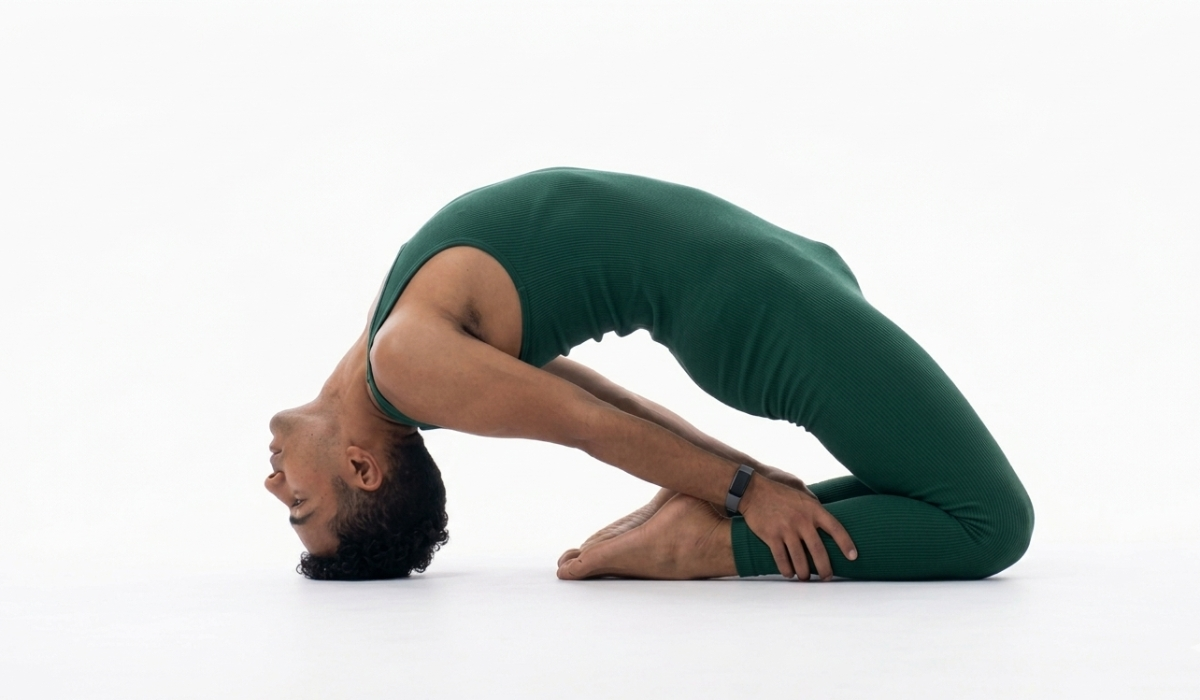
Laghu Vajrasana is a deep backbend yoga pose that improves flexibility, strength, and posture. The word “Laghu” means small, and “Vajra” means thunderbolt, symbolizing strength and stability.
In this pose, the body bends backward while balancing on the knees, creating a strong stretch in the spine and thighs. Laghu Vajrasana is an intermediate to advanced posture that requires flexibility and control.
It helps open the chest, improve breathing, and strengthen the back muscles. With regular practice, this pose can increase confidence, body awareness, and overall flexibility when performed safely.
Meaning of Laghu Vajrasana
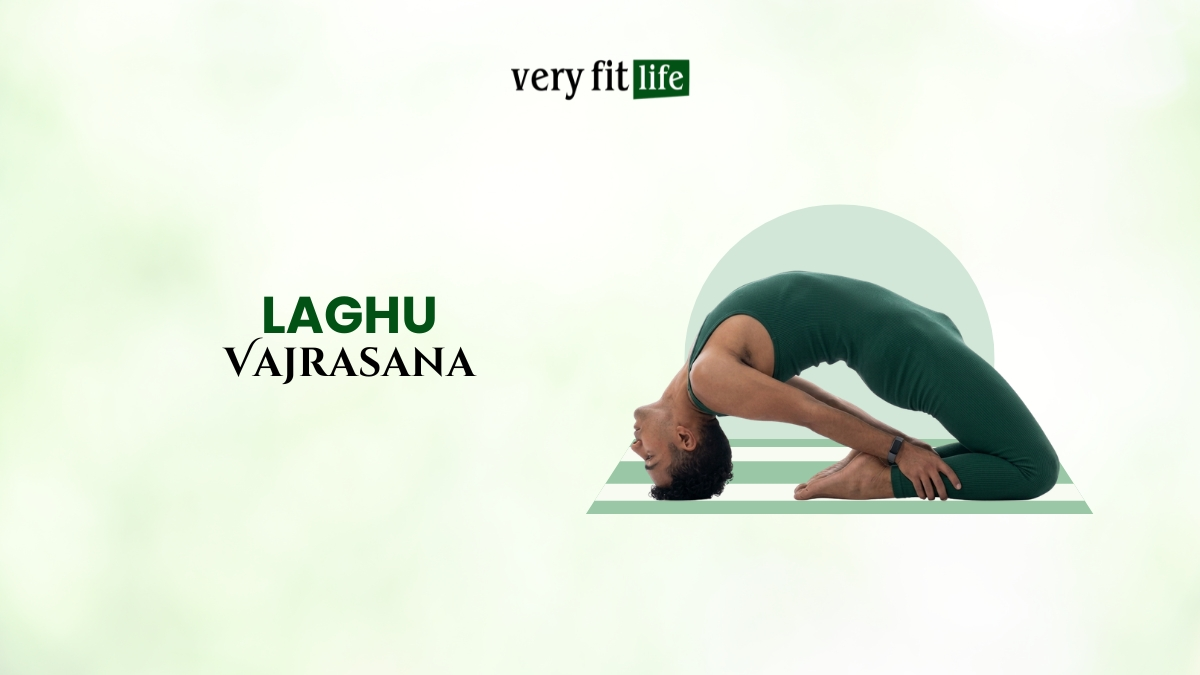
The name comes from Sanskrit:
- Laghu – Small or light
- Vajra – Thunderbolt (symbol of strength)
- Asana – Pose
Laghu Vajrasana represents strength, flexibility, and balance in the body.
How to Perform Laghu Vajrasana (Step by Step)
Step 1: Start in Vajrasana
- Sit on your heels in Vajrasana.
- Keep your back straight and shoulders relaxed.
Step 2: Rise on Knees
- Lift your body up so you are standing on your knees.
- Keep knees hip-width apart.
Step 3: Begin the Backbend
- Slowly lean backward.
- Keep your thighs straight and hips forward.
Step 4: Reach the Feet
- Place your hands on your heels or ankles.
- Continue bending backward carefully.
Step 5: Deepen the Pose
- Drop your head gently backward.
- Keep your chest open and lifted.
Step 6: Hold the Pose
- Breathe slowly and deeply.
- Stay in the position for a few seconds.
Step 7: Release the Pose
- Slowly bring your body back to upright.
- Sit back in Vajrasana and relax.
Benefits of Laghu Vajrasana
1. Improves Spine Flexibility
This pose stretches and strengthens the back muscles.
2. Opens the Chest
It expands the chest and improves breathing capacity.
3. Strengthens Thighs and Knees
The legs support the body weight during the pose.
4. Improves Posture
It helps correct slouching and strengthens the spine.
5. Boosts Energy
Backbends often increase energy and alertness.
Best Time to Practice
Laghu Vajrasana is best practiced:
- In the morning
- After warming up the body
- On an empty stomach
It should be done after basic stretching exercises.
Duration of the Pose
- Beginners: 5–10 seconds
- Intermediate: 15–20 seconds
- Advanced: 30 seconds or more
Repeat 2–3 times if comfortable.
Who Can Practice Laghu Vajrasana?
This pose is suitable for:
- Intermediate yoga practitioners
- People working on flexibility
- Those with some experience in backbend poses
Beginners should practice with guidance.
Preparatory Poses
Before attempting Laghu Vajrasana, practice:
- Camel Pose (Ustrasana)
- Cobra Pose (Bhujangasana)
- Bridge Pose (Setu Bandhasana)
- Cat-Cow Stretch
These help prepare the spine and muscles.
Precautions
Avoid this pose if you have:
- Severe back pain
- Knee injuries
- Neck problems
- High or low blood pressure (consult a doctor)
Always warm up before practice.
Common Mistakes
- Forcing the backbend too quickly
- Letting hips move backward
- Straining the neck
- Holding the breath
Move slowly and keep breathing steady.
Tips for Beginners
- Start with easier backbend poses
- Use a yoga block or support if needed
- Keep the movement slow and controlled
- Focus on proper breathing
Flexibility will improve with time.
Mental and Emotional Benefits
Laghu Vajrasana is known to open the chest area, which is connected with emotional release.
Regular practice may help:
- Improve confidence
- Reduce stress
- Increase energy levels
- Create a sense of openness
Conclusion
Laghu Vajrasana is a powerful backbend yoga pose that improves flexibility, strength, and posture. It stretches the spine, opens the chest, and strengthens the legs.
Although it may feel challenging at first, regular and careful practice can make it easier over time. By maintaining proper alignment and breathing, practitioners can safely enjoy its benefits. Laghu Vajrasana not only supports physical health but also boosts energy and confidence. With patience and consistency, it can become an important part of a balanced yoga routine.
Sources:
Keil, D. (2025, April 25). Anatomical breakdown of Laghu Vajrasana. Yoganatomy.
Yoga Pose: Little Thunderbolt | Pocket Yoga. (n.d.).
How to do Laghu Vajrasana (The Little Thunderbolt) – Omstars. (n.d.).