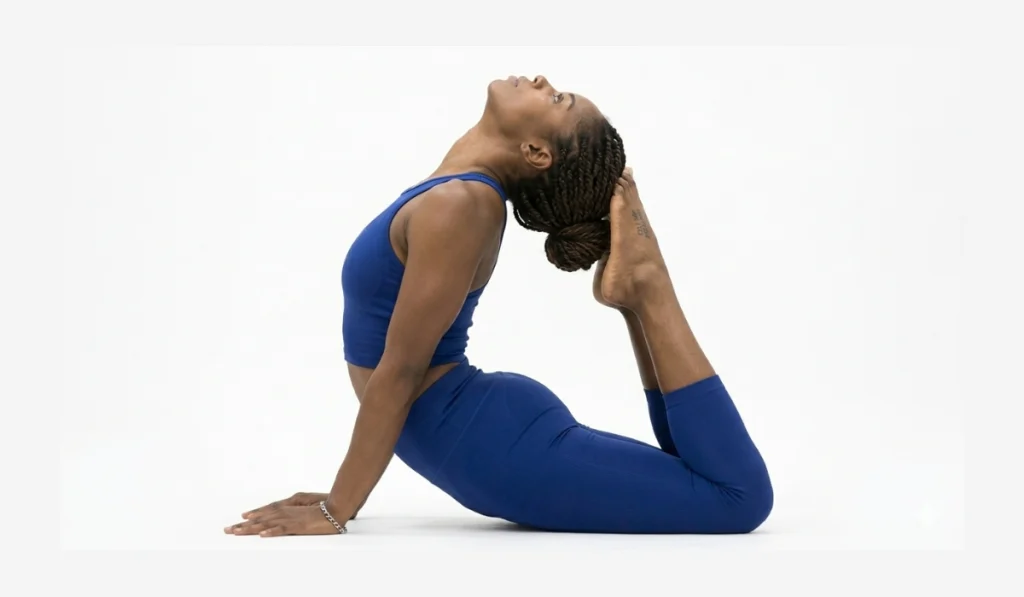
In yoga, the eyes are more than just tools for seeing the outside world. They are also powerful guides for focusing the mind and directing energy. One special technique that connects the eyes with concentration is called Drishti.
Drishti means “focused gaze.” It is used in yoga postures (asanas), meditation, and pranayama to train attention and awareness. Instead of letting the eyes wander, Drishti teaches us to look with purpose. This simple practice calms the mind, sharpens focus, and deepens the spiritual side of yoga.
What is Drishti?

The word Drishti comes from Sanskrit and means “sight” or “view.” In yoga, it refers to fixing the eyes on a single point while practicing.
When the gaze is steady, the mind also becomes steady. This helps reduce distractions, improve balance, and connect body with breath. Drishti is not just about the eyes—it is about inner vision and awareness.
Types of Drishti in Yoga
Traditionally, yoga describes nine main Drishtis. Each one has a specific direction of gaze:
- Nasagra Drishti – Tip of the nose
- Bhrumadhya Drishti – Between the eyebrows (Third Eye)
- Nabhi Chakra Drishti – At the navel
- Hastagra Drishti – At the hand
- Angushtha Ma Dyai Drishti – At the thumb
- Angushtha Graha Drishti – At the toes
- Parshva Drishti – To the side
- Urdhva Drishti – Upward gaze
- Hasta Drishti – Toward the palm (used in mudras and certain postures)
Each Drishti has its own effect, helping to balance the body and focus the mind during yoga practice.
How to Practice Drishti
In Yoga Asanas
- While holding a posture, fix your eyes on the recommended Drishti point.
- For example:
- In Tree Pose (Vrikshasana), focus on a still point in front of you.
- In Downward Dog (Adho Mukha Svanasana), gaze at your navel (Nabhi Chakra Drishti).
- In Warrior II (Virabhadrasana II), look past the front hand (Hastagra Drishti).
In Pranayama
- During breathing exercises, use Nasagra Drishti (tip of the nose) to control wandering thoughts.
In Meditation
- Use Bhrumadhya Drishti (between the eyebrows) to awaken inner awareness and stimulate the third eye.
Benefits of Drishti
1. Physical Benefits
- Improves balance in standing poses
- Strengthens eye muscles and reduces strain
- Coordinates movement with breath
2. Mental Benefits
- Trains the mind to stay present
- Reduces stress and anxiety
- Improves memory and concentration
3. Spiritual Benefits
- Directs prana (life energy) toward chakras
- Awakens inner awareness
- Helps in reaching deeper meditation states
Science Behind Drishti
Modern science supports the use of focused gazing:
- Improves neuroplasticity by training the brain to hold attention.
- Activates the parasympathetic nervous system, reducing stress.
- Helps in eye-hand coordination by improving visual focus during movement.
Eye exercises like Drishti are also used in therapy for better focus and vision health.
When to Practice Drishti
- During Asanas: To improve posture and concentration.
- Before Meditation: As preparation for stillness.
- During Stressful Times: Helps calm racing thoughts.
Duration: Even 2–5 minutes of steady gaze daily can improve focus.
Safety Tips and Precautions
- Do not strain the eyes—keep your gaze gentle.
- People with eye problems (like glaucoma) should consult a doctor before intense gazing practices.
- Beginners should start with easy Drishti points like nasagra (nose tip) or hastagra (hand).
- Practice in a calm environment without distractions.
Drishti in Daily Life
Drishti is not only for yoga mats—it can be applied in daily life too. For example:
- While studying, keep your gaze on the book or screen with full focus.
- During conversations, maintain eye contact to show presence.
- While walking, fix your gaze ahead instead of looking around.
Practicing Drishti outside yoga helps reduce distraction and builds mindfulness in everyday activities.
Drishti vs Trataka
| Aspect | Drishti | Trataka |
| Meaning | Focused gaze during yoga | Concentrated gazing meditation |
| Eyes | Gentle focus | Intense, unblinking gaze |
| Use | Asanas, pranayama, daily practice | Cleansing + meditation |
| Effect | Improves balance & awareness | Improves eyesight & deep focus |
This shows that while both involve the eyes, Drishti is used more in movement and practice, while Trataka is more meditative and cleansing.
Conclusion
Drishti is a powerful yogic technique that connects the eyes, mind, and breath. By fixing the gaze on a single point, it helps steady the body, sharpen the mind, and direct energy.
It is more than just looking—it is seeing with awareness. In yoga, where the eyes go, the mind follows. Drishti teaches us to guide our attention, both on the mat and in life.
For anyone seeking balance, focus, and inner peace, Drishti is a simple but transformative tool.
Sources:
Wikipedia contributors. (2025, February 25). Drishti (yoga). Wikipedia.
How to practice drishti. (2013, May 27).
Pikörn, I. (2024, June 18). Drishti: Practicing yogic gaze for alignment & awareness. Insight Timer Blog.