
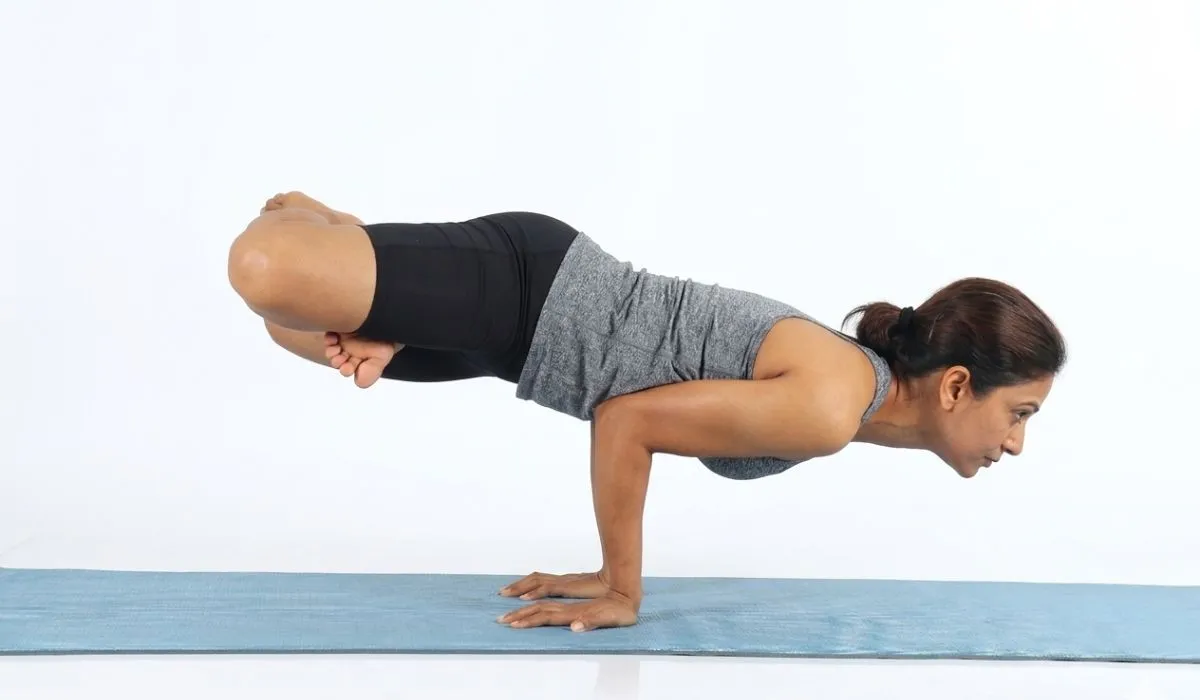
Padma Mayurasana is an advanced yoga pose that combines strength, balance, and flexibility. The word “Padma” means lotus, and “Mayura” means peacock.
In this pose, the legs are placed in Lotus Pose while the body is balanced on the hands like a peacock. Padma Mayurasana is known for strengthening the arms, wrists, and core muscles.
It also improves balance and concentration. This pose is usually practiced by experienced yoga practitioners because it requires strong arms and flexible hips. With regular practice, it can improve stability, body control, and confidence.
Meaning of Padma Mayurasana
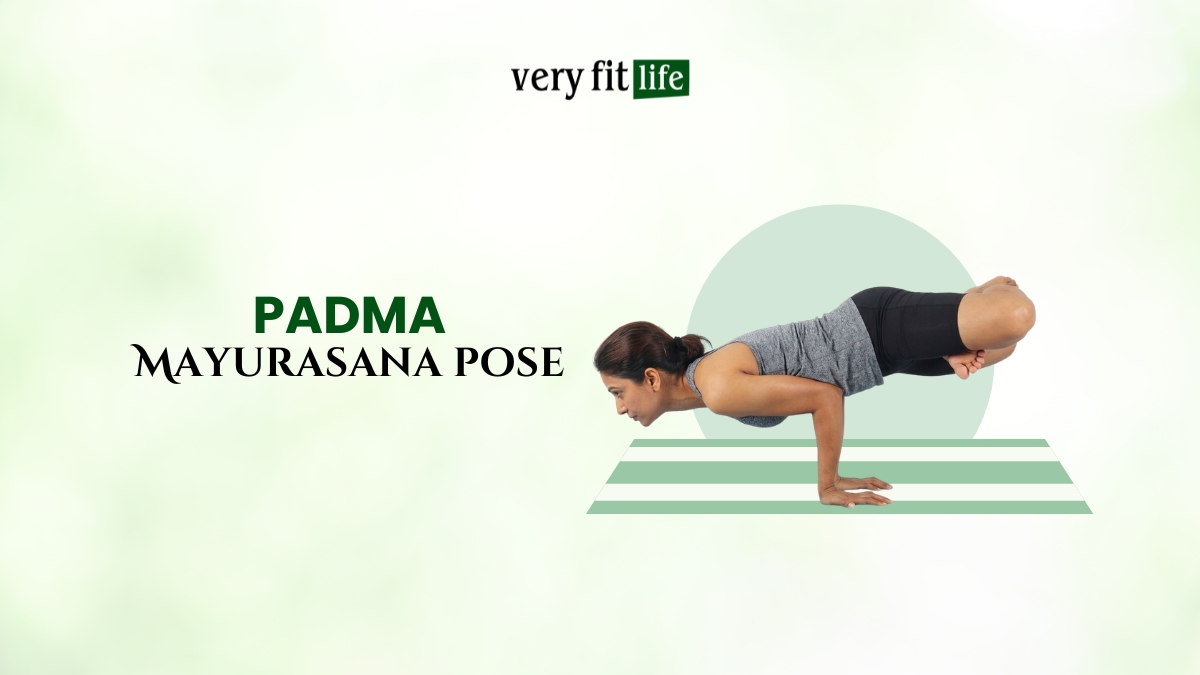
The name comes from Sanskrit:
- Padma – Lotus
- Mayura – Peacock
- Asana – Pose
The pose looks like a peacock with folded legs, symbolizing beauty, strength, and balance.
How to Perform Padma Mayurasana (Step by Step)
Step 1: Sit in Lotus Pose
- Sit in Padmasana (Lotus Pose).
- Place each foot on the opposite thigh.
- Keep your spine straight.
Step 2: Place Hands on the Floor
- Bend forward and place your palms on the ground.
- Fingers should point toward your feet or slightly outward.
Step 3: Position the Elbows
- Bend your elbows and place them into your abdomen.
- Keep elbows close together.
Step 4: Lean Forward
- Shift your body weight forward slowly.
- Keep your core tight.
Step 5: Lift the Body
- Lift your legs and torso off the ground.
- Balance your body on your hands.
Step 6: Hold the Pose
- Keep your body straight and steady.
- Breathe normally.
Step 7: Release the Pose
- Slowly lower your body.
- Return to a relaxed sitting position.
Benefits of Padma Mayurasana
1. Strengthens Arms and Wrists
This pose builds strong muscles in the arms and shoulders.
2. Improves Core Strength
The abdominal muscles work hard to maintain balance.
3. Enhances Balance
Balancing on the hands improves coordination and stability.
4. Stimulates Digestion
Pressure on the abdomen may support digestive health.
5. Increases Focus
The pose requires concentration and control.
Best Time to Practice
Padma Mayurasana is best practiced:
- In the morning
- On an empty stomach
- After proper warm-up
It is usually part of advanced yoga sessions.
Duration of the Pose
- Beginners: 5–10 seconds
- Intermediate: 15–20 seconds
- Advanced: 30 seconds or more
Repeat 2–3 times if comfortable.
Who Can Practice Padma Mayurasana?
This pose is suitable for:
- Advanced yoga practitioners
- People with strong arms and flexible hips
- Those experienced with Lotus Pose and arm balances
Beginners should avoid or practice with guidance.
Preparatory Poses
Before attempting this pose, practice:
- Peacock Pose (Mayurasana)
- Lotus Pose (Padmasana)
- Crow Pose (Bakasana)
- Plank Pose
These help build strength and flexibility.
Precautions
Avoid this pose if you have:
- Wrist injuries
- Shoulder problems
- Hernia or abdominal issues
- Knee injuries (for Lotus Pose)
Always warm up before practice.
Common Mistakes
- Placing elbows incorrectly
- Not engaging the core
- Forcing the Lotus position
- Losing balance due to poor alignment
Practice slowly and with control.
Tips for Beginners
- Master Mayurasana first
- Improve hip flexibility for Lotus Pose
- Practice near a wall for safety
- Focus on steady breathing
Progress step by step.
Mental and Spiritual Benefits
Padma Mayurasana improves concentration and mental strength. Balancing poses help calm the mind and increase awareness.
Regular practice may:
- Improve focus
- Build confidence
- Increase discipline
- Strengthen mind-body connection
Conclusion
Padma Mayurasana is a powerful and advanced yoga pose that combines strength, balance, and flexibility. It strengthens the arms, core, and improves coordination. Although it may look difficult, consistent practice can make it achievable over time.
By practicing safely and maintaining proper breathing, yoga practitioners can enjoy its benefits. This pose not only improves physical strength but also enhances mental focus and confidence. With patience and dedication, Padma Mayurasana can become an important part of an advanced yoga practice.
Sources:
Embry, R. (2024, July 21). Asana tip sheet #31 – Padma mayurasana. Blissful Yogini: Yoga Teacher Resources and Inspiration.
BipinJi. (2025, March 5). Padma Mayurasana (Lotus or bound peacock pose). Gyan Yog Breath.
Neha. (2022, September 24). Padma Mayurasana – Lotus or bound Peacock pose in yoga. World Yoga Forum.
Yogapedia. (2023, December 21). Padma Mayurasana. Yogapedia.


