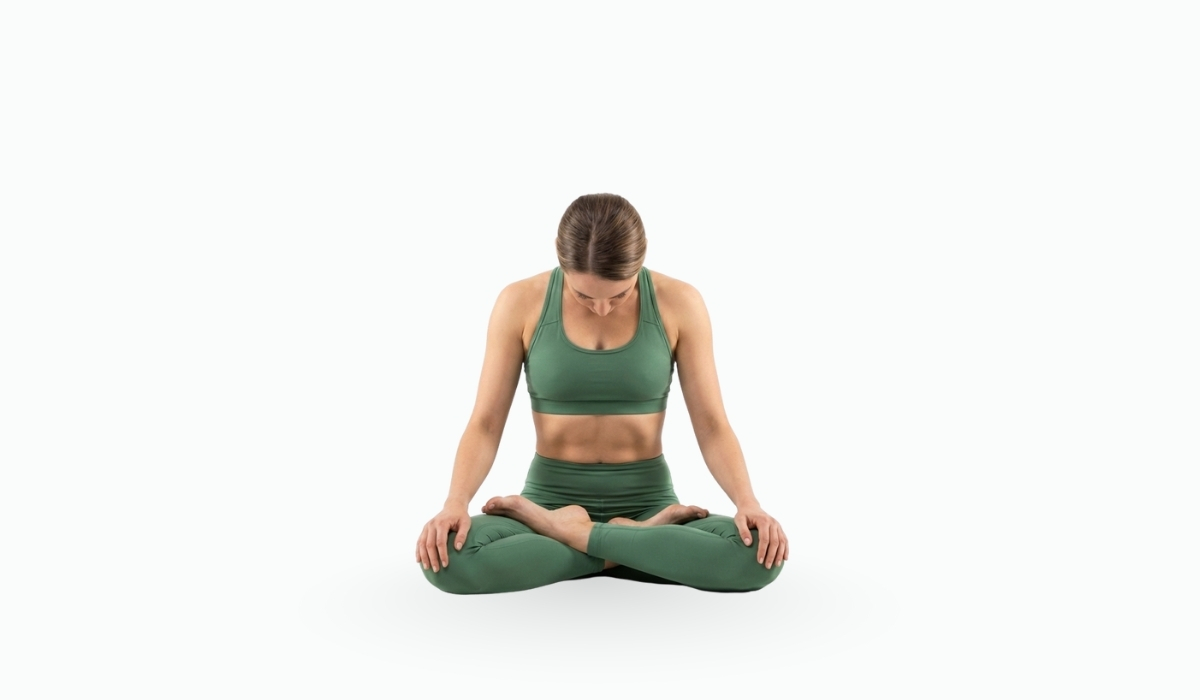
Jalandhara Bandha is an important yogic practice used to control breath and energy in the body. The word Jalandhara means net or flow, and Bandha means lock.
This practice is known as the throat lock because it involves gently lowering the chin toward the chest. Jalandhara Bandha helps regulate breathing, calm the mind, and balance internal energy. It is mainly practiced during pranayama and meditation.
Though simple to perform, this bandha plays a very powerful role in maintaining physical health and mental stability.
Meaning of Jalandhara Bandha

The Sanskrit meaning is:
- Jalandhara – flow or network
- Bandha – lock
Jalandhara Bandha means the throat lock.
It controls the flow of energy through the neck and throat area.
What Is Jalandhara Bandha?
Jalandhara Bandha is a yogic lock where the chin is gently pressed toward the chest while holding the breath. The spine remains straight, shoulders relaxed, and chest lifted. This position creates a lock in the throat area, which helps control the movement of prana (energy) in the body.
Type of Yogic Practice
Jalandhara Bandha is:
- An internal yogic lock
- A breath-control technique
- A supporting practice for pranayama
It is one of the three main bandhas in yoga.
Purpose of Jalandhara Bandha
The main purposes are:
- Regulating breath
- Controlling energy flow
- Protecting the heart and brain
- Improving concentration
It helps maintain balance in the body.
How to Practice Jalandhara Bandha (Simple Steps)
- Sit in a comfortable meditative posture
- Keep the spine straight
- Inhale deeply
- Hold the breath gently
- Lower the chin toward the chest
- Lift the chest slightly
- Relax the shoulders
- Hold the lock comfortably
- Release the chin and exhale slowly
Practice without strain.
Breathing in Jalandhara Bandha
Breathing rules:
- Practice after inhalation
- Hold breath gently
- Release before exhaling
Breath should always feel comfortable.
Best Time to Practice
Jalandhara Bandha is best practiced:
- Early morning
- On an empty stomach
- In a quiet place
This helps improve focus and safety.
Physical Benefits of Jalandhara Bandha
This bandha provides many physical benefits:
- Improves neck posture
- Regulates blood flow to the brain
- Supports thyroid function
- Protects the heart
It helps maintain overall body balance.
Benefits for Nervous System
Jalandhara Bandha helps:
- Calm the nervous system
- Reduce stress
- Improve mental clarity
It creates a soothing effect.
Mental Benefits of Jalandhara Bandha
This practice helps:
- Increase concentration
- Improve mental stability
- Reduce anxiety
- Support meditation
A calm mind improves awareness.
Jalandhara Bandha and Energy Control
In yoga, energy is called prana.
Jalandhara Bandha:
- Controls upward energy flow
- Prevents sudden energy movement
- Maintains balance
It acts as an energy regulator.
Role of Jalandhara Bandha in Pranayama
This bandha is commonly used in:
- Anulom Vilom
- Bhastrika
- Kapalbhati
- Advanced pranayama practices
It ensures safe breathing.
Jalandhara Bandha and Meditation
During meditation, this bandha:
- Supports steady posture
- Improves focus
- Reduces distractions
It helps deepen awareness.
Importance of Throat and Neck Area
The throat area:
- Controls breathing
- Supports speech
- Regulates energy flow
Jalandhara Bandha keeps this area balanced.
Common Mistakes to Avoid
Avoid these mistakes:
- Forcing the chin down
- Slouching the spine
- Holding breath too long
- Tightening shoulders
Gentle practice is best.
Safety Tips
- Practice slowly
- Avoid strain in neck
- Learn under guidance
- Stop if dizziness occurs
Safety is very important.
Who Should Avoid Jalandhara Bandha
Avoid or take care if you have:
- Neck injury
- Cervical pain
- High blood pressure
- Heart problems
Always consult a professional if unsure.
Difference Between Three Main Bandhas
| Bandha | Area | Purpose |
| Mula Bandha | Pelvic floor | Root lock |
| Uddiyana Bandha | Abdomen | Abdominal lock |
| Jalandhara Bandha | Throat | Throat lock |
All three work together.
Jalandhara Bandha and Posture Control
This bandha:
- Improves neck alignment
- Supports straight spine
- Reduces strain
Good posture improves breathing.
Spiritual Meaning of Jalandhara Bandha
Spiritually, this bandha represents:
- Control of inner energy
- Balance of mind and body
- Self-discipline
It supports spiritual growth.
Jalandhara Bandha in Daily Life
This practice helps:
- Improve awareness
- Support calm breathing
- Maintain posture
It builds mindfulness.
Importance of Regular Practice
Regular practice helps:
- Improve breath control
- Increase mental clarity
- Maintain energy balance
Consistency brings results.
Jalandhara Bandha for Beginners
Beginners should:
- Practice for short duration
- Avoid force
- Focus on alignment
- Be patient
Progress comes slowly.
Jalandhara Bandha and Self-Control
This bandha teaches:
- Breath awareness
- Emotional control
- Mental discipline
Self-control improves inner peace.
Conclusion
Jalandhara Bandha is a powerful yogic technique that helps control breath, balance energy, and calm the mind. By gently locking the throat area, this practice protects the heart and brain while improving focus and posture. It plays a key role in pranayama and meditation and supports both physical and mental well-being.
Jalandhara Bandha teaches that true strength lies in control and awareness. With regular and gentle practice, it becomes an important tool for energy balance, inner calm, and spiritual growth.
Sources:
Jalandhara Bandha. (n.d.).
Ryt, A. P. (2020, September 1). How to do throat lock (Jalandhara Bandha) in yoga. Verywell Fit.
Jalandhara Bandha | Prajna Yoga. (n.d.). Prajna Yoga.
Keil, D. (2023, October 30). What is Jalandhara Bandha? Yoganatomy.