Yoga is a journey that transcends physical movement, offering a path toward mental clarity, emotional balance, and physical vitality. However, for a beginner, stepping onto the mat for the first time can feel like entering a foreign land with its own language, customs, and physical demands.
While it is natural to feel a bit lost at the start, certain common pitfalls can hinder progress or, worse, lead to injury.
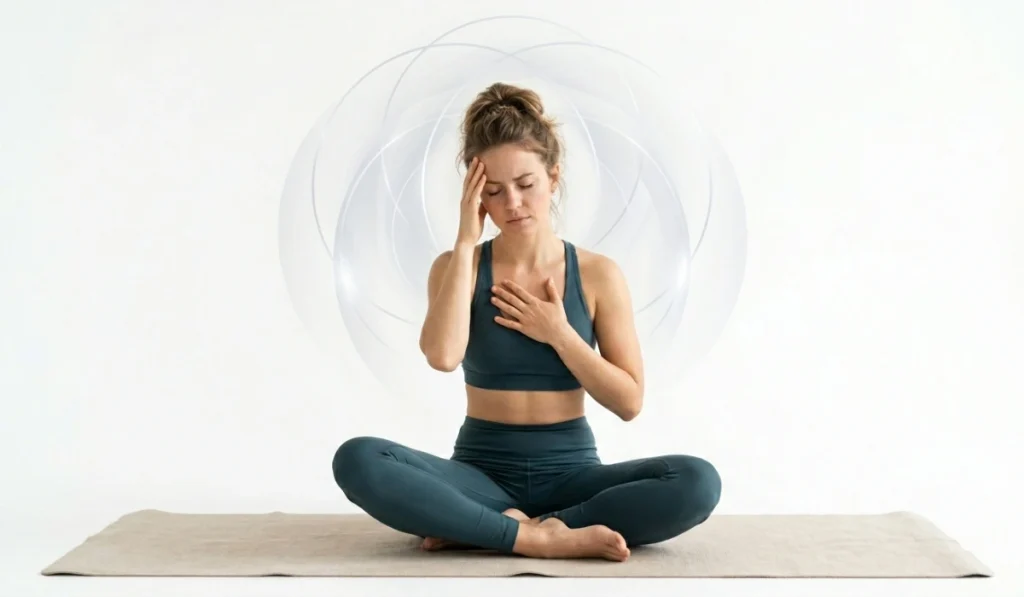
Understanding these “beginners yoga mistakes” isn’t about achieving perfection; it’s about practicing with mindfulness and safety. Here is a comprehensive look at the hurdles beginners often face and how to navigate them to build a sustainable, lifelong practice.
1. The Comparison Trap: Watching the Person Next to You
One of the most frequent mistakes is looking at a neighbor’s pose to gauge your own success. Yoga is a deeply personal experience. Every body is built differently—skeletal structure, muscle tension, and past injuries all dictate how a pose looks.
The Fix
Focus your gaze (your Drishti) on a fixed point or close your eyes. Remember that the person in a perfect headstand might have been practicing for a decade. Your only competition is the person you were yesterday.
2. Holding Your Breath
When a pose gets difficult, the natural human instinct is to hold the breath. This creates tension in the nervous system and deprives the muscles of the oxygen they need to stretch and stabilize. Breath is the bridge between the mind and the body; without it, you are simply doing gymnastics, not yoga.
The Fix
Prioritize the breath over the pose. If you find yourself gasping or holding your breath, back out of the posture slightly until you can maintain a steady, rhythmic flow of air through your nose.
3. Pushing Through Pain
The “no pain, no gain” mentality has no place in a yoga studio. There is a vital distinction between the discomfort of a deep stretch and the sharpness of a potential injury. Pushing into joint pain (knees, lower back, or wrists) is a recipe for long-term damage.
The Fix
Learn to listen to your body’s “yellow lights.” If you feel a sharp, stabbing, or electric sensation, stop immediately. Yoga should feel like an opening, not a tearing.
4. Neglecting the Use of Props
Many beginners view blocks, straps, and bolsters as “crutches” for those who aren’t flexible enough. In reality, props are tools that provide better alignment and make poses more accessible. Using a block in a Triangle Pose (Trikonasana) can help you keep your chest open rather than collapsing forward to touch the floor.
The Fix
Grab two blocks and a strap before every class. Use them to “bring the floor to you,” allowing you to maintain the integrity of your spine.
5. Skipping the Foundation: Hands and Feet
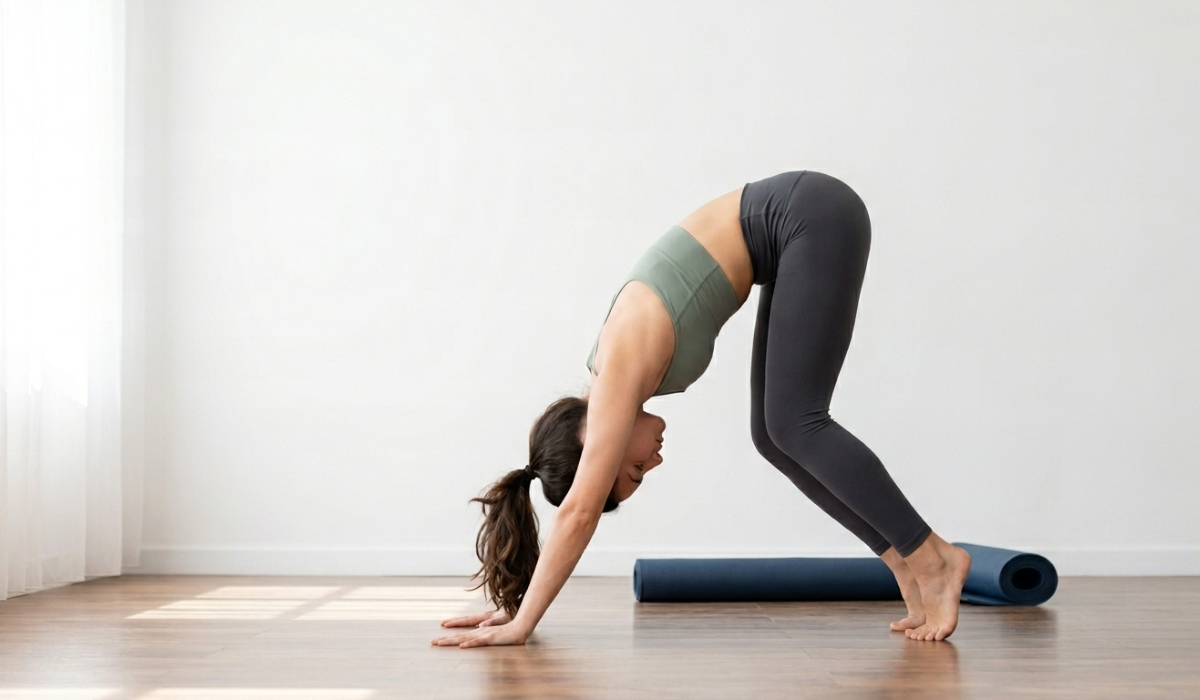
In poses like Downward-Facing Dog or Warrior I, beginners often dump all their weight into their wrists or the outer edges of their feet. This leads to fatigue and joint strain.
The Fix
Distribute weight evenly. In hand-balanced poses, press through the knuckles and fingertips (a technique known as Hasta Bandha). In standing poses, engage the four corners of your feet to create a stable “root” for the rest of your body to grow from.
6. Overextending the Lower Back
In backbends like Cobra or Upward-Facing Dog, beginners often try to get as high as possible by “crunching” into the lower spine. This puts immense pressure on the lumbar vertebrae.
The Fix
Focus on length rather than height. Engage your core muscles to support your spine and think about sending your chest forward and up, rather than just bending backward.
7. Rushing the Transitions
Often, we focus so much on the “final” shape of a pose that we ignore the movement in between. Injuries frequently happen during the transition from one pose to another because the body is not engaged or mindful.
The Fix
Treat the transition as the pose. Move slowly and deliberately. If you are moving from Plank to Chaturanga, maintain your core engagement the entire way down.
8. Wearing Inappropriate Clothing
Yoga involves a wide range of motion—folding, twisting, and going upside down. Wearing clothes that are too baggy can get in the way or fall over your face, while clothes that are too restrictive can prevent you from breathing or moving fully.
The Fix
Opt for moisture-wicking, form-fitting (but not tight) clothing that allows for a full range of motion. Test your outfit at home with a few stretches to ensure it stays in place.
9. Skipping Savasana (Corpse Pose)
It is tempting to roll up your mat and head for the door as soon as the physical work is done. However, Savasana is arguably the most important part of the practice. It allows the nervous system to shift from “fight or flight” to “rest and digest,” integrating the benefits of the physical movement.
The Fix
Stay for the final five minutes. Let your body become heavy and your mind become still. This is where the true “yoga” happens.
10. Expecting Immediate Results
We live in a world of instant gratification, but yoga is a “slow medicine.” Beginners often get frustrated when they aren’t flexible after three classes. Yoga is a practice of patience and discipline (Tapas).
The Fix
Shift your goal from “becoming flexible” to “becoming present.” If you show up consistently, the physical changes will happen as a by product of your dedication.
Conclusion: The Path of the Mindful Student
Starting a yoga practice is an act of courage. It requires you to be a “beginner” again, which can be humbling. By avoiding these common mistakes, you move away from a purely physical workout and toward a holistic practice that nurtures both the body and the soul.
The beauty of yoga is that the mat is a microcosm of life. When you learn to breathe through a difficult pose without panicking, you learn to breathe through a difficult day at work. When you learn to stop comparing yourself to the person on the next mat, you learn to value your own unique path in the world.
Sources:
The Art of Living. (2023, March 27). 5 common mistakes yoga beginners make. Art Of Living (United States).
Binder, M. (2026, May 4). 10 mistakes beginners make in yoga – and how to fix them. Mind Body Globe.
Mitchell, S. (2026, May 8). 7 essential yoga tips for beginners & common mistakes | Body Flows article.