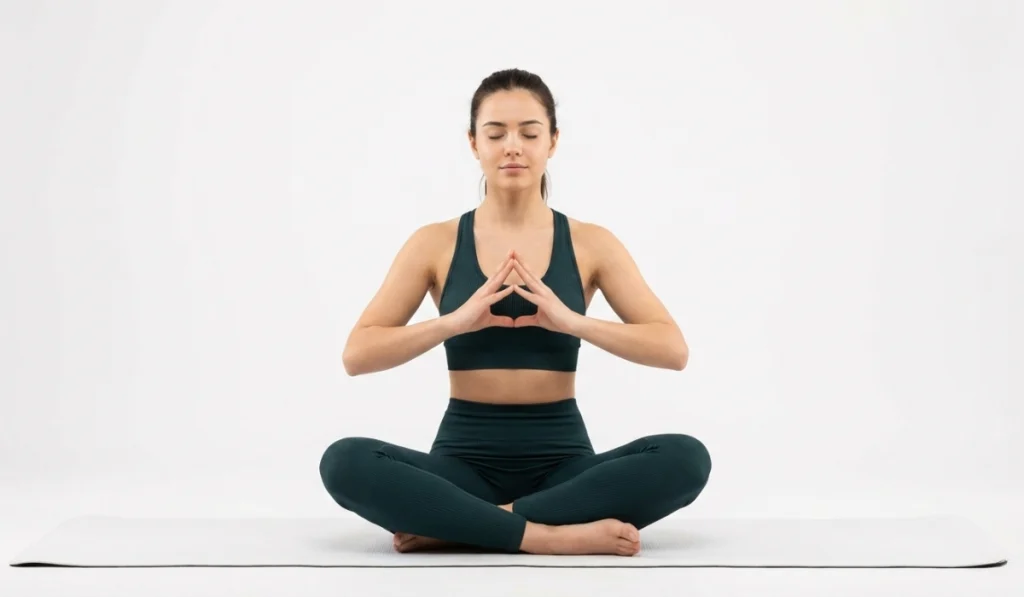
Yoga has many postures, each designed to improve health, focus, and balance. One of the simplest yet most powerful postures is Vajrasana, also called the Thunderbolt Pose or Diamond Pose. The name comes from the Sanskrit word Vajra, which means thunderbolt or diamond, a symbol of strength and energy.
Vajrasana is unique because it is one of the few yoga poses that can be done right after eating. Many yoga postures require an empty stomach, but Vajrasana helps with digestion and can be practiced after meals.
In this article, we will look at what Vajrasana is, how to practice it, its benefits, variations, precautions, and tips for including it in daily life.
What is Vajrasana?

Vajrasana is a seated yoga posture where you kneel and sit back on your heels with a straight spine. It looks very simple, but holding this pose for a few minutes can bring many benefits.
It is commonly used for:
- Meditation and breathing practices.
- Relaxation after meals.
- Improving posture and focus.
Because it is easy to learn, Vajrasana is one of the first poses taught to yoga beginners.
How to Practice Vajrasana
Here is a step-by-step guide:
Step 1: Starting Position
- Kneel on the floor with your knees, ankles, and big toes touching.
- Keep your spine straight and your body relaxed.
Step 2: Sitting on the Heels
- Slowly lower your buttocks to sit on your heels.
- Your thighs should rest on your calves, and your heels should point outward, touching your hips.
Step 3: Hand Placement
- Place your palms gently on your thighs, facing down.
- Relax your shoulders and keep your neck straight.
Step 4: Breathing
- Close your eyes and take slow, deep breaths.
- Focus on your breath moving in and out.
Step 5: Duration
- Beginners can start with 2–5 minutes.
- With practice, you can hold the pose for 15–20 minutes or longer.
Benefits of Vajrasana
Though simple, Vajrasana has many powerful benefits:
1. Physical Benefits
- Improves digestion: Sitting in this pose helps food move smoothly through the stomach and intestines.
- Strengthens lower body: It makes the thighs, hips, and calves stronger.
- Relieves back pain: A straight spine in Vajrasana improves posture and reduces back discomfort.
- Reduces gas and bloating: Helpful after meals.
- Supports weight loss: Improves metabolism when done regularly.
2. Mental Benefits
- Calms the mind: Slow breathing in Vajrasana reduces stress and anxiety.
- Improves concentration: It is often used for meditation and chanting.
- Balances emotions: Brings inner peace and stability.
3. Spiritual Benefits
- Prepares for meditation: The stillness of Vajrasana helps you focus inward.
- Increases energy: Activates the Vajra Nadi (energy channel) in yogic tradition.
- Helps with pranayama: Provides the perfect base for breathing exercises.
Variations of Vajrasana
Different forms of Vajrasana can be practiced depending on your comfort and purpose:
1. Supta Vajrasana (Reclined Thunderbolt Pose)
- From Vajrasana, lean back slowly until your back rests on the floor.
- This gives a deep stretch to the thighs and abdomen.
2. Parvatasana in Vajrasana (Mountain Pose)
- Sit in Vajrasana and raise both arms overhead.
- Stretch the spine upward with palms joined.
3. Anulom-Vilom in Vajrasana
- Practice alternate nostril breathing while seated in Vajrasana.
- Helps combine digestive and breathing benefits.
Precautions
While Vajrasana is safe for most people, it should be practiced with care:
- People with knee pain, arthritis, or recent surgery should avoid or modify the pose.
- Do not force yourself if you feel sharp pain in the legs or back.
- Beginners may find it difficult to sit for long—start slowly.
- Pregnant women should practice Vajrasana only with proper support and guidance.
Tips for Daily Practice
- Use a yoga mat or soft blanket to protect your knees.
- If sitting on the heels is hard, place a cushion between your thighs and calves.
- Practice Vajrasana after meals for better digestion.
- Combine with deep breathing or meditation for best results.
- Stay relaxed and avoid stiffening the body.
Vajrasana in Daily Life
This pose is not limited to yoga sessions. You can use Vajrasana in everyday routines:
- Sit in Vajrasana after lunch or dinner for 10 minutes.
- Use it as a posture for study, reading, or chanting.
- Practice it before bed to calm the mind and improve sleep.
Many people in Asian cultures naturally sit in Vajrasana-style positions during meals or prayer, which shows how practical and natural the pose is.
Conclusion
Vajrasana, the Thunderbolt Pose, is one of the simplest yet most effective yoga postures. It improves digestion, strengthens the body, calms the mind, and prepares you for meditation. Unlike many other yoga poses, it can be done right after eating, making it unique and highly practical.
With regular practice, Vajrasana can bring balance to your body and mind. It teaches us that sometimes, the simplest practices are the most powerful. By sitting still, breathing deeply, and focusing inward, Vajrasana helps us find peace, strength, and clarity in daily life.
Sources:
Wikipedia contributors. (2025, July 19). Vajrasana (yoga). Wikipedia.
Frothingham, S. (2024, September 19). Health benefits of vajrasana pose and how to do it. Healthline.
The Art of Living. (2023, September 22). Vajrasana: the yoga pose to use during breathing exercises. Art Of Living (United States).
MasterClass. (n.d.). Vajrasana: How to Perform The Rock Pose – 2025 – MasterClass.