Vajrapradama Mudra is a beautiful hand gesture used in yoga and meditation to build inner strength and self-confidence. The word “Vajra” means thunderbolt or diamond, which represents power and firmness. “Pradama” means trust or strong faith.
So, Vajrapradama Mudra means “the gesture of unshakable trust.” This mudra helps remove self-doubt and fear. It is simple to practice and suitable for beginners.
When combined with slow breathing, it may calm the mind and strengthen emotional balance. Regular practice can help develop courage, confidence, and inner stability in daily life.
What Is Vajrapradama Mudra?
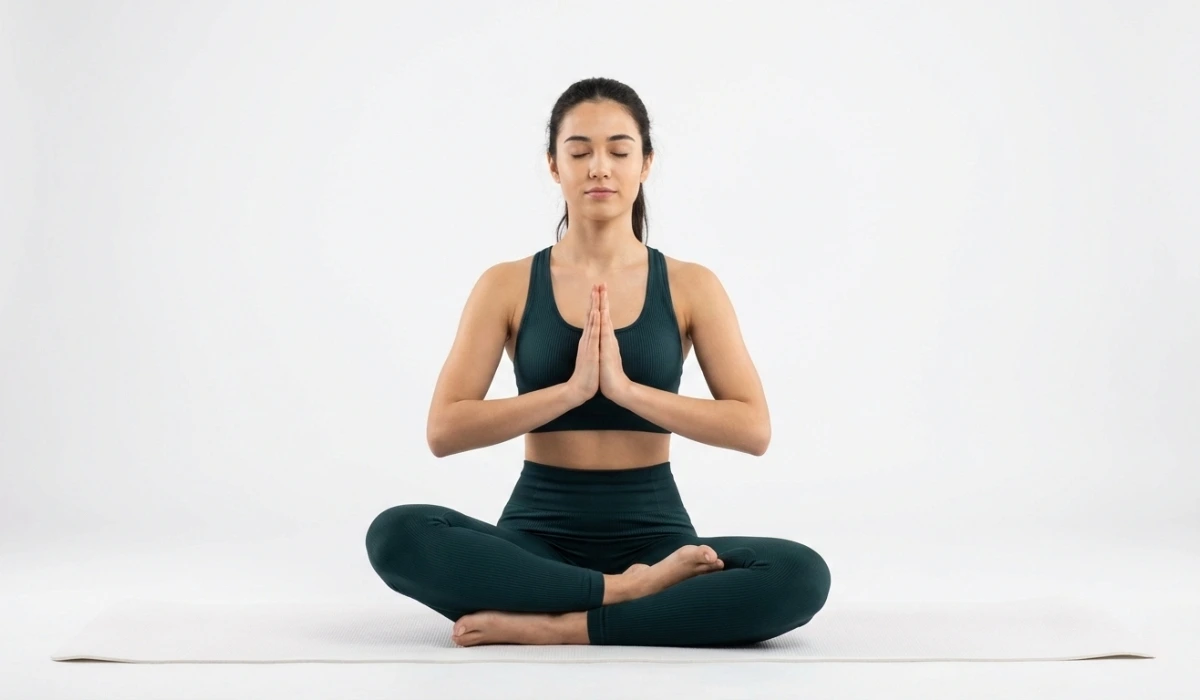
Vajrapradama Mudra is a hand gesture where the fingers of both hands are interlocked and placed near the heart center.
This mudra represents:
- Inner strength
- Self-trust
- Confidence
- Emotional stability
It is often practiced when someone feels nervous, insecure, or doubtful.
Meaning of the Word “Vajrapradama”
The word can be understood as:
- Vajra = Thunderbolt, diamond, strength
- Pradama = Trust, faith, confidence
Together, it symbolizes strong and unbreakable faith in oneself.
How to Perform Vajrapradama Mudra (Step by Step)
Step 1: Sit Comfortably
Step 2: Interlock the Fingers
- Bring both hands together.
- Interlock all fingers gently.
- Keep the palms open and relaxed.
Step 3: Position the Hands
- Place the interlocked hands near the center of your chest (heart area).
- Keep elbows relaxed.
Step 4: Focus on Breathing
- Close your eyes.
- Take slow and deep breaths.
- Practice for 5–15 minutes.
While breathing, think positive thoughts like:
“I trust myself” or “I am strong.”
How Does Vajrapradama Mudra Work?
Placing the hands near the heart center helps activate feelings of self-love and emotional balance.
Interlocking fingers creates a sense of unity and strength. Slow breathing helps calm the nervous system.
Together, they may:
- Reduce fear
- Increase confidence
- Improve emotional control
Benefits of Vajrapradama Mudra
1. Builds Self-Confidence
It helps remove self-doubt and negative thinking.
2. Reduces Fear and Anxiety
Slow breathing calms nervous energy.
3. Improves Emotional Stability
It supports balanced emotions.
4. Encourages Positive Thinking
It promotes trust in oneself.
5. Strengthens Inner Courage
Helpful before public speaking or important events.
Best Time to Practice
- Before exams or interviews
- Before public speaking
- During meditation
- When feeling insecure
It can be practiced anytime you need confidence.
How Long Should You Practice?
- Beginners: 5 minutes
- Intermediate: 10–15 minutes
- Advanced: 20 minutes
Daily practice gives better results.
Who Can Practice Vajrapradama Mudra?
- Students
- Working professionals
- Meditation practitioners
- Anyone feeling nervous or insecure
It is safe for most people.
Precautions
Vajrapradama Mudra is very safe, but:
- Do not squeeze fingers too tightly.
- Keep shoulders relaxed.
- Breathe naturally.
Comfort and relaxation are important.
Vajrapradama Mudra and Breathing
For better results, try this breathing pattern:
- Inhale deeply for 4 seconds
- Hold for 2 seconds
- Exhale slowly for 6 seconds
Long exhalation helps reduce stress and fear.
Scientific View
Deep breathing activates the parasympathetic nervous system. This helps:
- Lower heart rate
- Reduce stress hormones
- Improve emotional balance
Positive affirmations combined with relaxed breathing may increase confidence and reduce anxiety.
Common Mistakes
- Pressing fingers too hard
- Slouching while sitting
- Breathing too fast
- Expecting instant results
Be patient and gentle.
Difference Between Vajrapradama Mudra and Other Mudras
| Vajrapradama Mudra | Hakini Mudra |
| Builds confidence | Improves memory |
| Fingers interlocked | Fingertips touching |
| Held near heart | Held in front of chest |
Each mudra serves a different purpose.
Spiritual Importance
Vajrapradama Mudra represents unshakable faith and inner strength. It reminds us that true power comes from within.
Regular practice may:
- Improve self-belief
- Increase emotional awareness
- Support spiritual growth
Confidence begins with trusting yourself.
Tips for Better Practice
- Practice in a quiet place
- Combine with positive affirmations
- Keep spine straight
- Stay consistent
Even a few minutes daily can improve self-confidence.
Conclusion
Vajrapradama Mudra is a simple and powerful hand gesture that builds confidence and emotional strength. By interlocking the fingers and placing them near the heart, it promotes self-trust and courage.
When combined with slow breathing, it may reduce fear and anxiety. Easy to practice and safe for beginners, this mudra can be used before stressful situations or during meditation. With regular and mindful practice, Vajrapradama Mudra helps develop inner stability and positive thinking. Consistency and patience are the keys to experiencing its benefits.
Sources:
Adams, A. (2020, June 1). A mudra for trust: Vajrapradama mudra. Ambuja Yoga.
Yoga, H. A. (2022, September 23). “Gesture of Unshakable Trust” or Vajrapradama Mudra. Hearts Alive Yoga.
Mosa. (2022, December 18). Mudra Monday: Vajrapradama Mudra — Oceana Mariani. Oceana Mariani.
Sharma, D. (2025, July 15). Vajrapradama Mudra: Meaning, Benefits, How to | Siddhi Yoga. Siddhi Yoga.