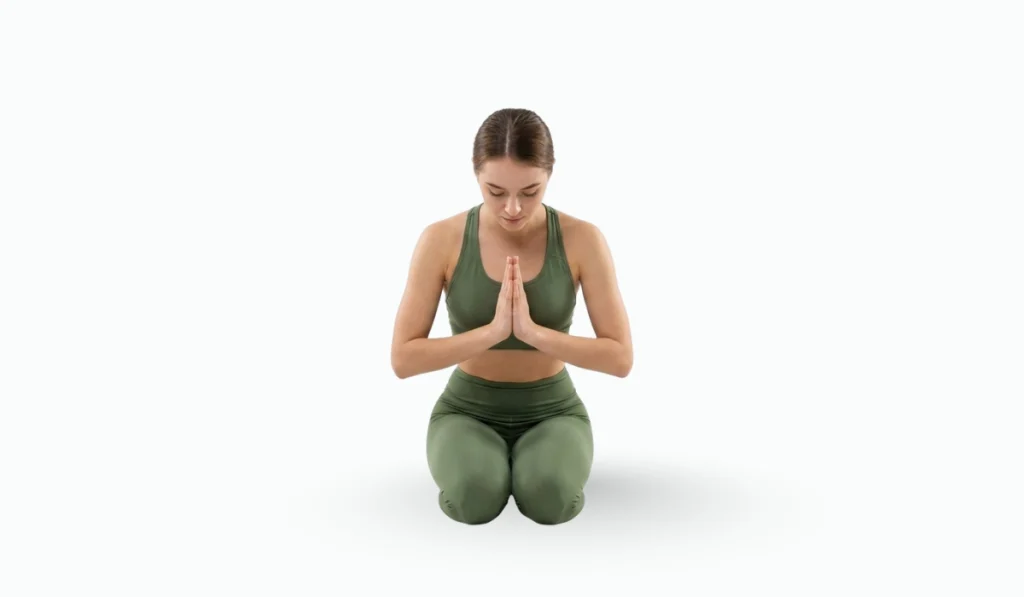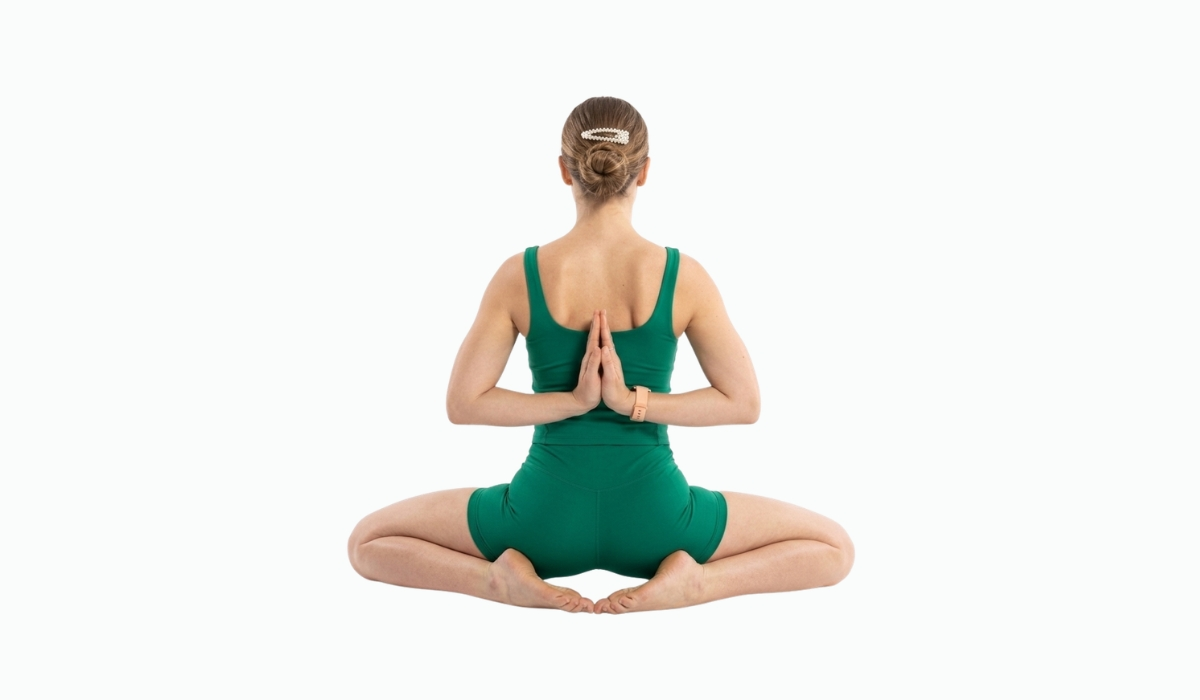
Paschima Namaskarasana, also called the Reverse Prayer Pose, is a gentle yet powerful yoga pose. It may look simple, but it offers many benefits for the body and mind. This pose mainly works on your shoulders, arms, chest, and posture.
In this article, you will learn what Paschima Namaskarasana is, how to do it, its benefits, and some easy tips to practice it safely.
What is Paschima Namaskarasana?
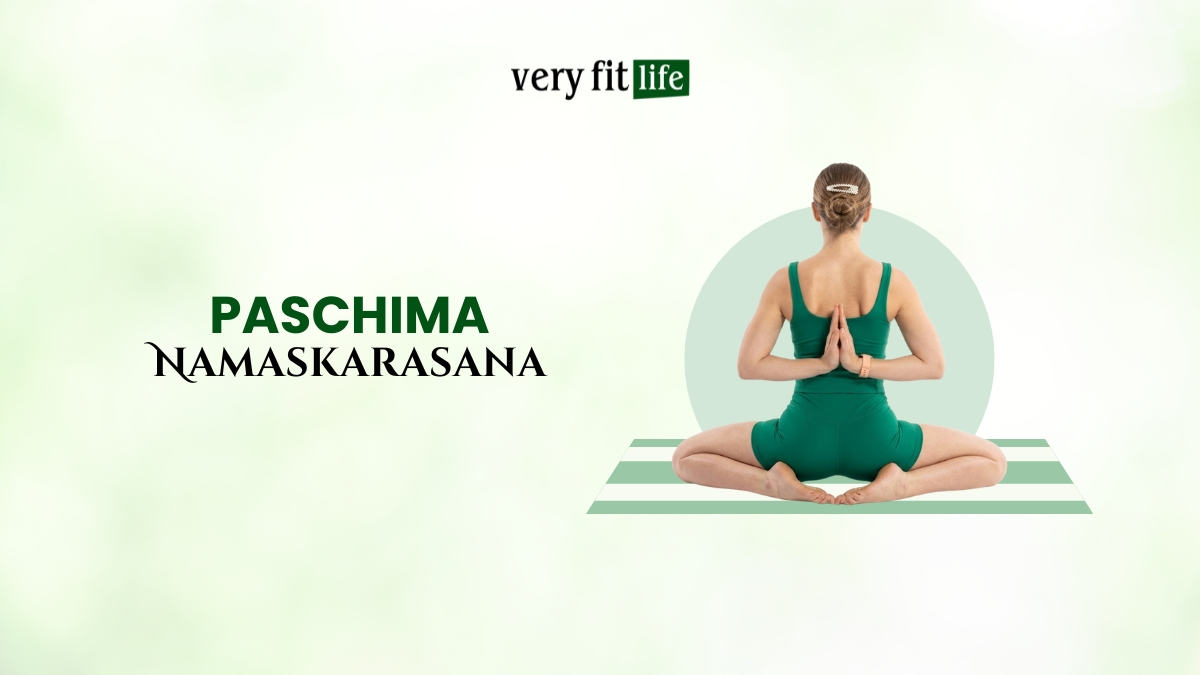
Paschima Namaskarasana is a yoga pose where you bring your hands together behind your back in a prayer position.
- Paschima means “west” or “back side of the body”
- Namaskara means “prayer” or “greeting”
- Asana means “pose”
So, this pose is basically a reverse prayer done behind your back.
How to Do Paschima Namaskarasana
Follow these simple steps:
Step-by-Step Guide:
- Stand straight in a comfortable position.
- Keep your feet together and your back straight.
- Take your arms behind your back slowly.
- Bend your elbows and bring your palms together.
- Try to place your hands in a prayer position behind your back.
- Keep your fingers pointing upward.
- Relax your shoulders and breathe normally.
- Hold the pose for 20–30 seconds.
If your hands do not touch at first, don’t worry. Practice daily and your flexibility will improve.
Benefits of Paschima Namaskarasana
This pose has many physical and mental benefits.
1. Improves Shoulder Flexibility
This pose stretches your shoulders deeply. It helps reduce stiffness and improves movement.
2. Strengthens Arms and Wrists
Keeping your hands pressed together builds strength in your arms and wrists.
3. Opens the Chest
It gently opens your chest, which helps in better breathing.
4. Improves Posture
If you sit a lot or use a mobile or laptop, this pose helps correct your posture.
5. Reduces Stress
Like many yoga poses, it calms your mind and reduces stress.
6. Boosts Blood Circulation
The pose improves blood flow, especially in the upper body.
Common Mistakes to Avoid
While doing Paschima Namaskarasana, avoid these mistakes:
- Forcing your hands to touch
- Bending your back too much
- Holding your breath
- Raising your shoulders too high
Always keep your movements slow and comfortable.
Easy Tips for Beginners
If you are new to yoga, these tips will help you:
- Start slowly and do not rush
- Warm up your shoulders before trying the pose
- Use a yoga strap or hold your elbows if your hands don’t meet
- Practice daily for better results
- Focus on your breathing
Who Should Avoid This Pose?
Paschima Namaskarasana is safe for most people, but some should be careful:
- People with shoulder injuries
- Those with wrist pain
- Anyone recovering from surgery
If you feel pain, stop immediately and rest.
When to Practice This Pose
You can do this pose:
- In the morning for better flexibility
- After light stretching
- During yoga sessions
Avoid doing it right after heavy meals.
Why This Pose is Special
Paschima Namaskarasana may look easy, but it is very effective. It works on areas of the body that are often tight, like shoulders and chest. It also improves balance between strength and flexibility.
In today’s life, many people sit for long hours. This causes poor posture and tight muscles. This pose is a simple way to fix that problem.
Conclusion
Paschima Namaskarasana is a powerful yet simple yoga pose. It helps improve flexibility, posture, and mental calmness. With regular practice, you will feel more relaxed and balanced.
The key is to practice slowly and stay consistent. Even if you cannot do the full pose at first, small steps will lead to big improvement over time.
By adding this pose to your daily routine, you take one more step toward a healthy and active life.
Sources:
Yoga Vastu. (2021, June 3). Paschima Namaskar – Yoga vastu.
Rakshak, & Rakshak. (2024, June 18). Paschim-Namaskarasana (Reverse Prayer Pose) | How to do | Benefits – The Art Of Living. The Art of Living – Making Life A Celebration.
Yoga, P. (n.d.). Paschima Namaskar Benefits, Steps & Yoga Pose Guide. Pratham Yoga.