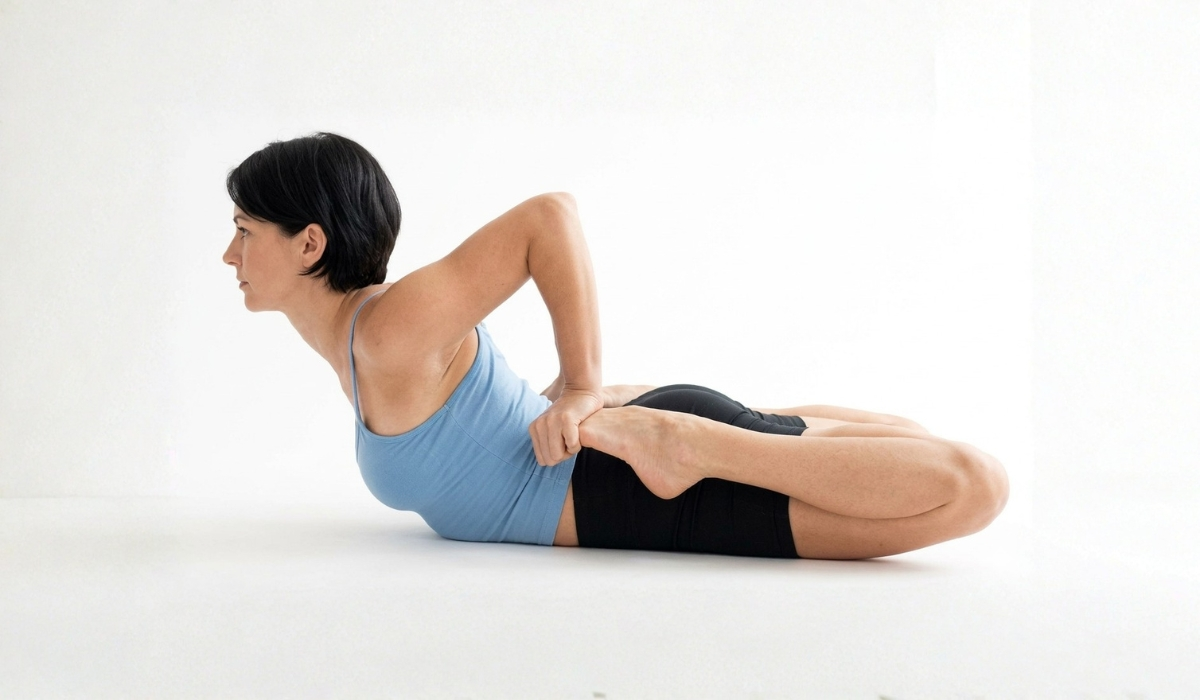
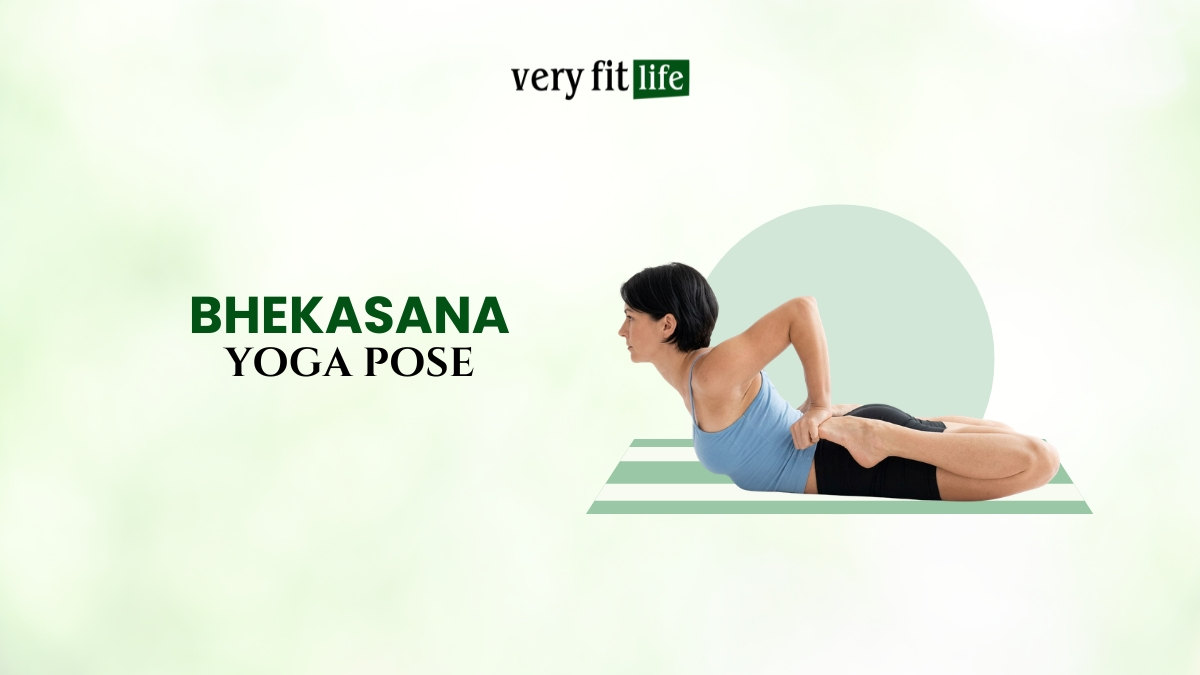
Bhekasana, also known as Frog Pose, is a deep backbend yoga posture that stretches the thighs, hips, and chest. The word “Bheka” means frog in Sanskrit, and the pose looks like a frog resting on the ground.
Bhekasana helps improve flexibility, especially in the front body, and strengthens the back muscles. It also opens the chest and improves posture. This pose is usually practiced by intermediate yoga practitioners because it requires flexibility and control.
With regular practice, Bhekasana can help reduce stiffness, improve breathing, and increase overall body awareness.
Meaning of Bhekasana
The name comes from:
- Bheka – Frog
- Asana – Pose
In this posture, the body shape looks similar to a frog, especially the position of the legs and chest.
How to Perform Bhekasana (Step by Step)
Step 1: Lie on Your Stomach
- Lie flat on your belly.
- Keep your legs straight and arms by your sides.
Step 2: Bend the Knees
- Bend both knees so your feet move toward your hips.
Step 3: Hold the Feet
- Reach back with your hands.
- Hold the tops of your feet or ankles.
Step 4: Press the Feet Down
- Gently press your feet toward the floor.
- Lift your chest and head upward.
Step 5: Open the Chest
- Keep your elbows pointing upward.
- Expand your chest and breathe deeply.
Step 6: Hold the Pose
- Maintain the position for a few breaths.
Step 7: Release the Pose
- Slowly release your feet.
- Lower your chest and relax.
Benefits of Bhekasana
1. Improves Flexibility
This pose deeply stretches the thighs, hips, and ankles.
2. Strengthens the Back
It builds strength in the spine and back muscles.
3. Opens the Chest
The pose improves breathing and lung capacity.
4. Improves Posture
It helps correct slouching by strengthening the upper body.
5. Stimulates Abdominal Organs
The pressure on the stomach may support digestion.
Best Time to Practice
It is best practiced:
- In the morning
- After warm-up exercises
- On an empty stomach
It is often included in backbend sequences.
Duration of the Pose
- Beginners: 10–15 seconds
- Intermediate: 20–30 seconds
- Advanced: 45 seconds or more
Repeat 2–3 times if comfortable.
Who Can Practice Bhekasana?
This pose is suitable for:
- Intermediate yoga practitioners
- People working on flexibility
- Those with experience in backbends
Beginners should practice under guidance.
Preparatory Poses
Before attempting This pose, practice:
- Cobra Pose (Bhujangasana)
- Bow Pose (Dhanurasana)
- Locust Pose (Shalabhasana)
- Cat-Cow Stretch
These prepare the spine and muscles.
Precautions
Avoid this pose if you have:
- Knee injuries
- Lower back pain
- Shoulder problems
Always warm up before practicing.
Common Mistakes
- Forcing the feet too strongly
- Letting elbows fall outward
- Holding the breath
- Lifting too quickly
Move slowly and breathe steadily.
Tips for Beginners
- Practice half frog pose (one leg at a time)
- Warm up the thighs and hips
- Use a yoga strap if needed
- Focus on gentle stretching
Flexibility will improve gradually.
Mental and Emotional Benefits
This pose is a heart-opening pose. It can help release tension stored in the chest and shoulders.
Regular practice may:
- Reduce stress
- Improve mood
- Increase energy
- Build confidence
Conclusion
Bhekasana (Frog Pose) is a powerful backbend that improves flexibility, strength, and posture. It stretches the thighs, opens the chest, and strengthens the back. Although it can feel challenging at first, regular practice helps increase comfort and control.
By practicing safely and maintaining steady breathing, yoga practitioners can enjoy its many benefits. Bhekasana not only supports physical health but also improves mental relaxation and energy. With patience and consistency, it can become a valuable part of a balanced yoga routine.
Sources:
Allen, W. (2025, August 26). Bhekasana.
A sequence to prepare for Bhekasana. (2013, June 10).
Hebbar, J. V. (2025, December 25). Bhekasana – Frog pose, how to do, Benefits, Effect on dosha. Easy Ayurveda Hospital.