When I first attempted Bow Pose (Dhanurasana), I struggled to lift both my chest and thighs off the mat. As a certified yoga teacher with years of experience, I now understand how powerful this backbend truly is.
Many of my students feel stiff or drained from sitting too long. This pose tackles that problem by energizing the body and improving flexibility.
Through consistent practice, I’ve seen how Bow Pose can open the heart and release tension in amazing ways.
If you’ve ever felt stuck in your body or mind, this pose might be the solution you’ve been searching for.
What Does the Mean of Bow Pose (Dhanurasana)?
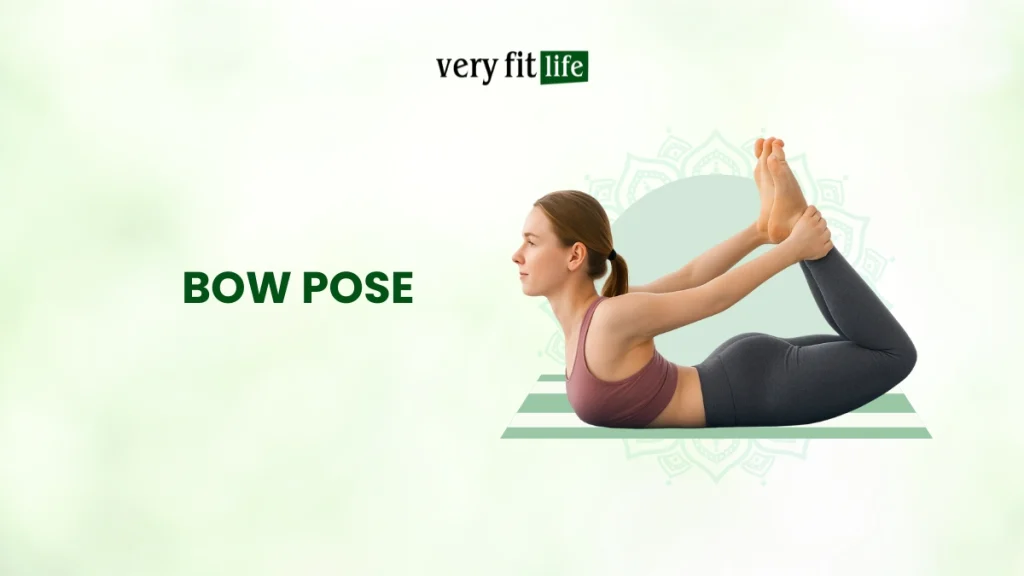
The word Dhanurasana comes from Sanskrit. “Dhanur” means bow, and “asana” means pose. When you’re in the full pose, your body looks like a drawn bow.
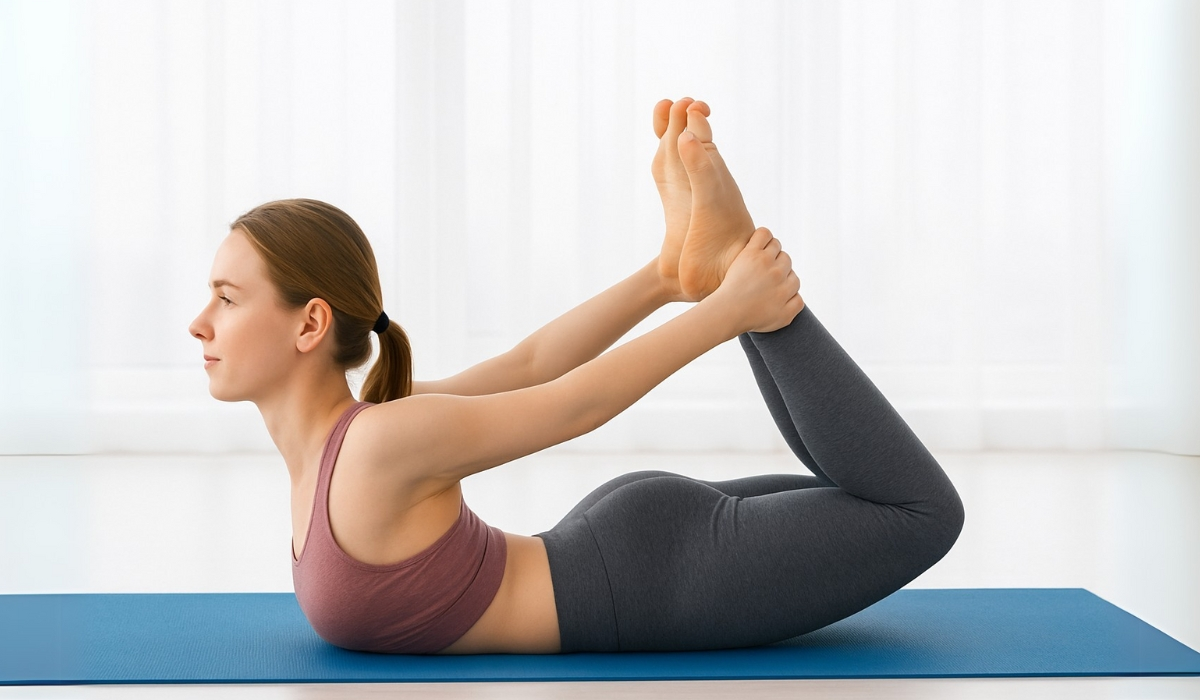
Your arms are the string, and your torso and legs form the curved bow. It’s a dynamic pose that blends strength, stretch, and balance. More than just a shape, it symbolizes energy being pulled back, ready to be released.
That’s why it’s known as a heart-opening and energizing posture. It teaches the body to stay strong while also being flexible—both physically and mentally.
Warm-Up Exercises
Before trying Bow Pose, it’s important to warm up your body. This reduces the risk of injury and helps you get deeper into the stretch. Here are a few good warm-ups:
- Cat-Cow Pose (Marjaryasana-Bitilasana): Loosens up the spine.
- Cobra Pose (Bhujangasana): Prepares the back and chest for deeper backbends.
- Child’s Pose (Balasana): Relaxes your body and mind.
- Locust Pose (Salabhasana): Strengthens the lower back and glutes.
- Quadriceps Stretch: Loosens tight thigh muscles.
Do these poses gently and mindfully. Spend at least 5–10 minutes warming up to make your practice safe and effective.
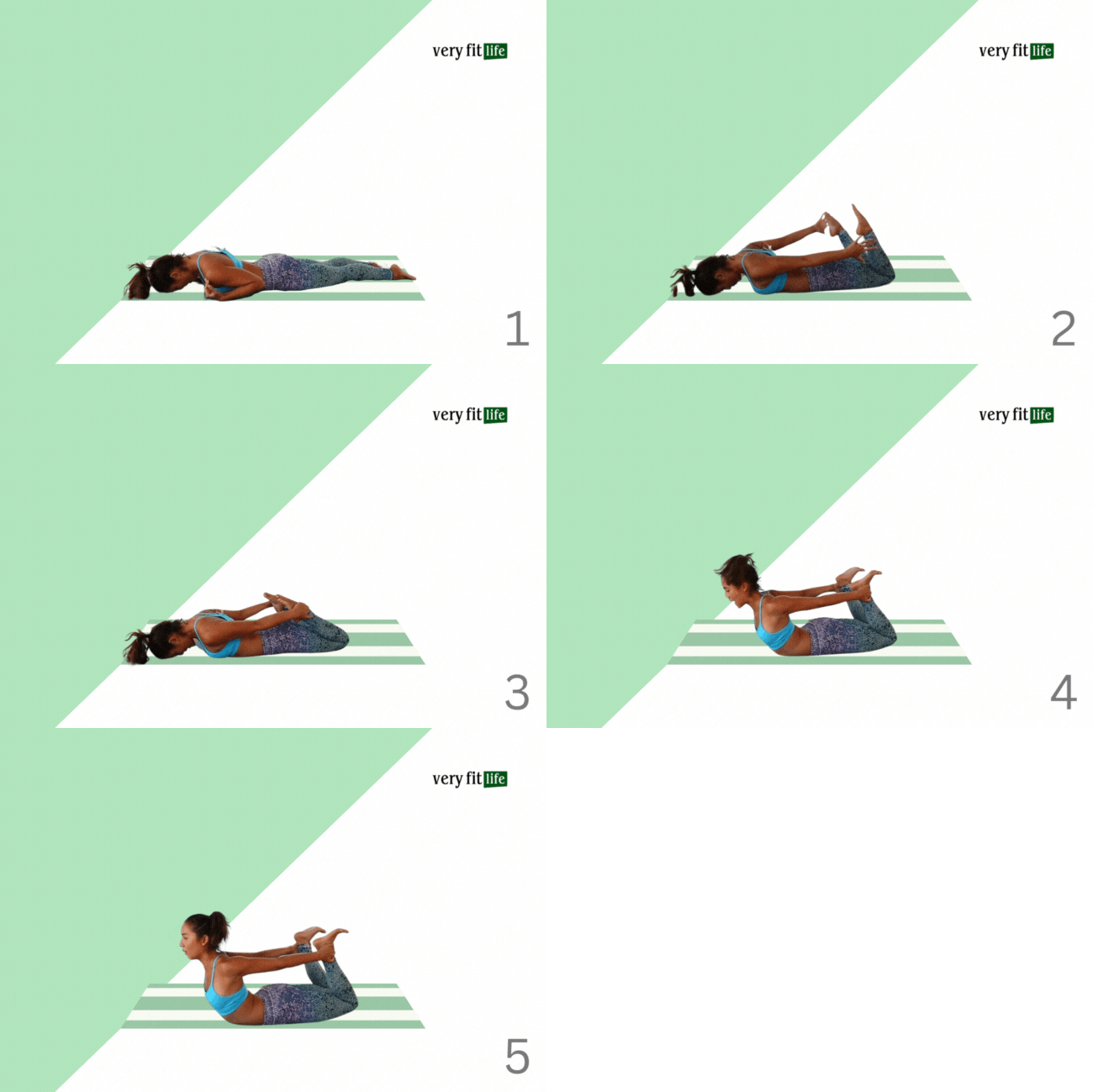
How to Perform Bow Pose (Dhanurasana)
- Lie on Your Stomach: Keep your arms beside your body and your chin on the mat.
- Bend Your Knees: Bring your heels close to your buttocks.
- Grab Your Ankles: Reach back with both hands and hold your ankles (not the feet).
- Inhale and Lift: As you breathe in, lift your chest and thighs off the floor. Pull your legs up and back.
- Hold the Pose: Keep your gaze forward. Breathe slowly and hold for 20–30 seconds.
- Exhale and Release: Gently let go of your ankles and rest.
Try to repeat the pose two to three times, with rest in between.
Here’s a video that explains this yoga pose in more detail.
Physical Benefits
Bow Pose offers many health benefits for the body:
- Improves Posture: Strengthens the spine and opens the chest.
- Boosts Flexibility: Stretches the back, thighs, and shoulders.
- Strengthens Core and Back: Helps tone muscles and improve balance.
- Stimulates Organs: Aids digestion by massaging abdominal organs.
- Opens the Heart and Lungs: Enhances breathing and blood circulation.
With regular practice, you may feel taller, more open, and less stiff—especially if you work at a desk all day.
Mental Benefits
Besides physical strength, Bow Pose also brings mental clarity:
- Reduces Stress: Opens the chest, which helps release built-up tension.
- Improves Focus: Balancing the body can improve concentration.
- Boosts Energy: Acts as a natural mood lifter.
- Enhances Emotional Release: Many people feel lighter or more peaceful after practicing.
As someone who teaches yoga regularly, I’ve seen how Bow Pose can turn a tired mind into a focused and refreshed one. It’s especially helpful on days when you feel emotionally drained.
Variations and Modifications
Not everyone can reach their ankles right away—and that’s okay! Here are some variations to help you build up:
- Use a Yoga Strap: Loop a strap around your ankles if your hands can’t reach them.
- Half Bow Pose (Ardha Dhanurasana): Lift one leg at a time to build strength and flexibility.
- Wall Support: Practice near a wall for extra balance and safety.
- Bolster or Blanket: Place it under your hips to ease pressure and help you lift.
Listen to your body. Over time, flexibility and strength will improve, and you may find the full pose becoming easier.
Safety Precautions
Bow Pose is safe for most people, but you should take care in certain situations:
- Avoid Pregnant: This pose puts pressure on the abdomen.
- Skip if You Have Back or Neck Pain: Unless guided by a healthcare provider.
- Don’t Force the Pose: Only go as far as your body allows.
- Warm Up Properly: Never enter the pose with cold muscles.
- Use Props if Needed: It’s better to use a strap than risk injury.
Always come out of the pose slowly and rest in Child’s Pose afterward to balance the spine.
Final Words
Bow Pose (Dhanurasana) is more than just a stretch—it’s a full-body experience that can energize your day, improve posture, and clear your mind.
Whether you’re a beginner or a long-time yogi, this pose offers something valuable for everyone.
As a yoga teacher, I’ve seen how just a few breaths in this pose can transform someone’s mood and energy. The key is to stay consistent, go slow, and listen to your body. With time, you’ll build strength, flexibility, and confidence—both on the mat and in life.
Sources:
Yoga Journal. (2025, February 25). Bow pose.
How to do a bow yoga pose. (n.d.). WebMD.
Tran, P. (2023, November 5). How to do bow pose in yoga. EverydayYoga.com.